
Marcela Cabutti at BIENALSUR, South Africa venue.
Con Nuestros Continentes Errantes, Marcela Cabutti propone un gesto simbólico y material para volver a unir Sudamérica y África, territorios que alguna vez compartieron un mismo suelo.
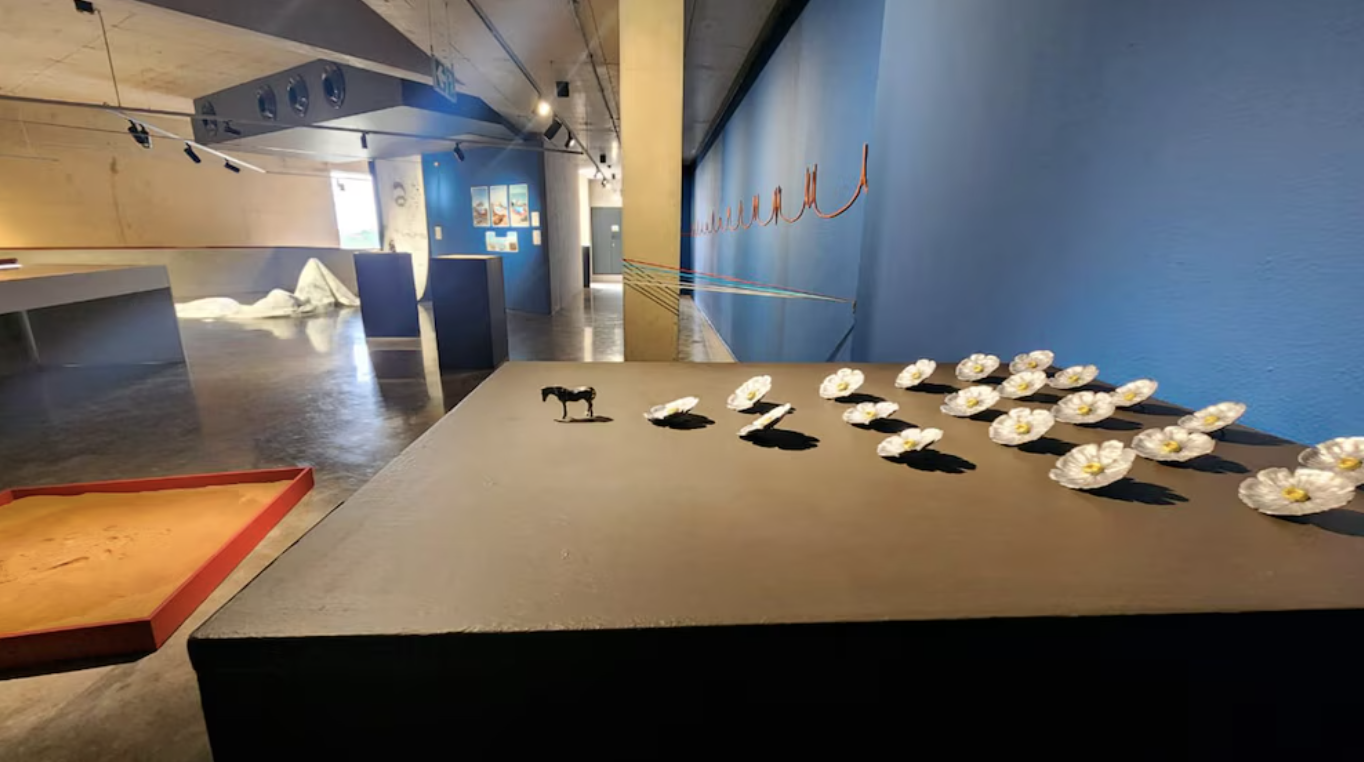
With Nuestros Continentes Errantes, Marcela Cabutti proposes a symbolic and material gesture to reunite South America and Africa—territories that once shared the same landmass. Presented at the Origins Centre of the University of the Witwatersrand in Johannesburg as part of BIENALSUR, the exhibition draws on geological memory to reflect on the separation of the continents and the possibility of reunion among landscapes, histories, and cultures. The project continues an investigation initiated by the artist in La piedra que predice and articulates science, art, and embodied experience as tools of knowledge.
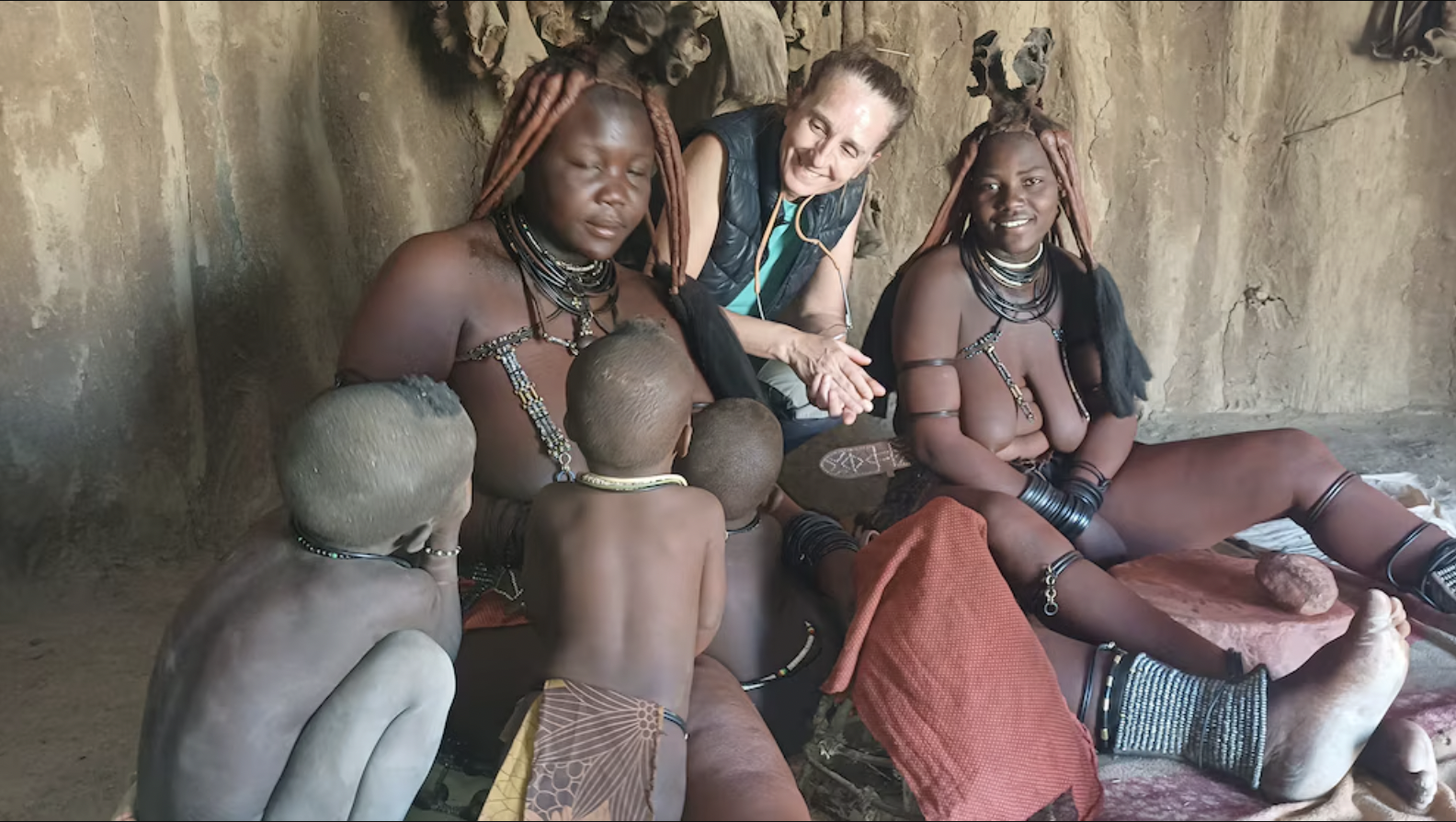
Curated by Clarisa Appendino and Tammy Hodgsfiiss, the exhibition takes as its point of departure the theory of continental drift and the studies of South African geologist Alexander du Toit, later revisited by Argentine geologist Dalla Salda. Building on these investigations—developed across Argentina, Uruguay, Namibia, and South Africa—Cabutti constructs a trajectory that links the Río de la Plata and Kalahari cratons, ancient foundations of Pangea and Gondwana, reinforcing a shared reading of the deep origins of both continents.
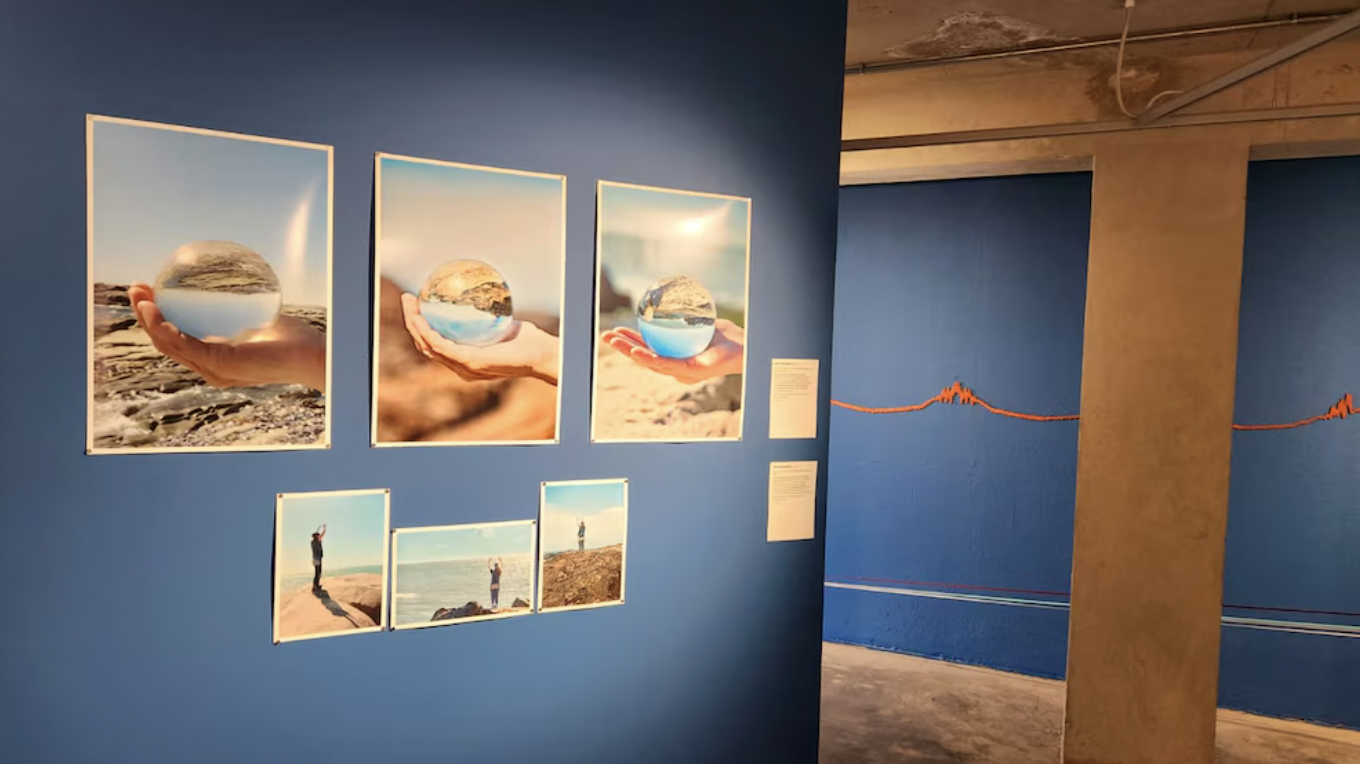
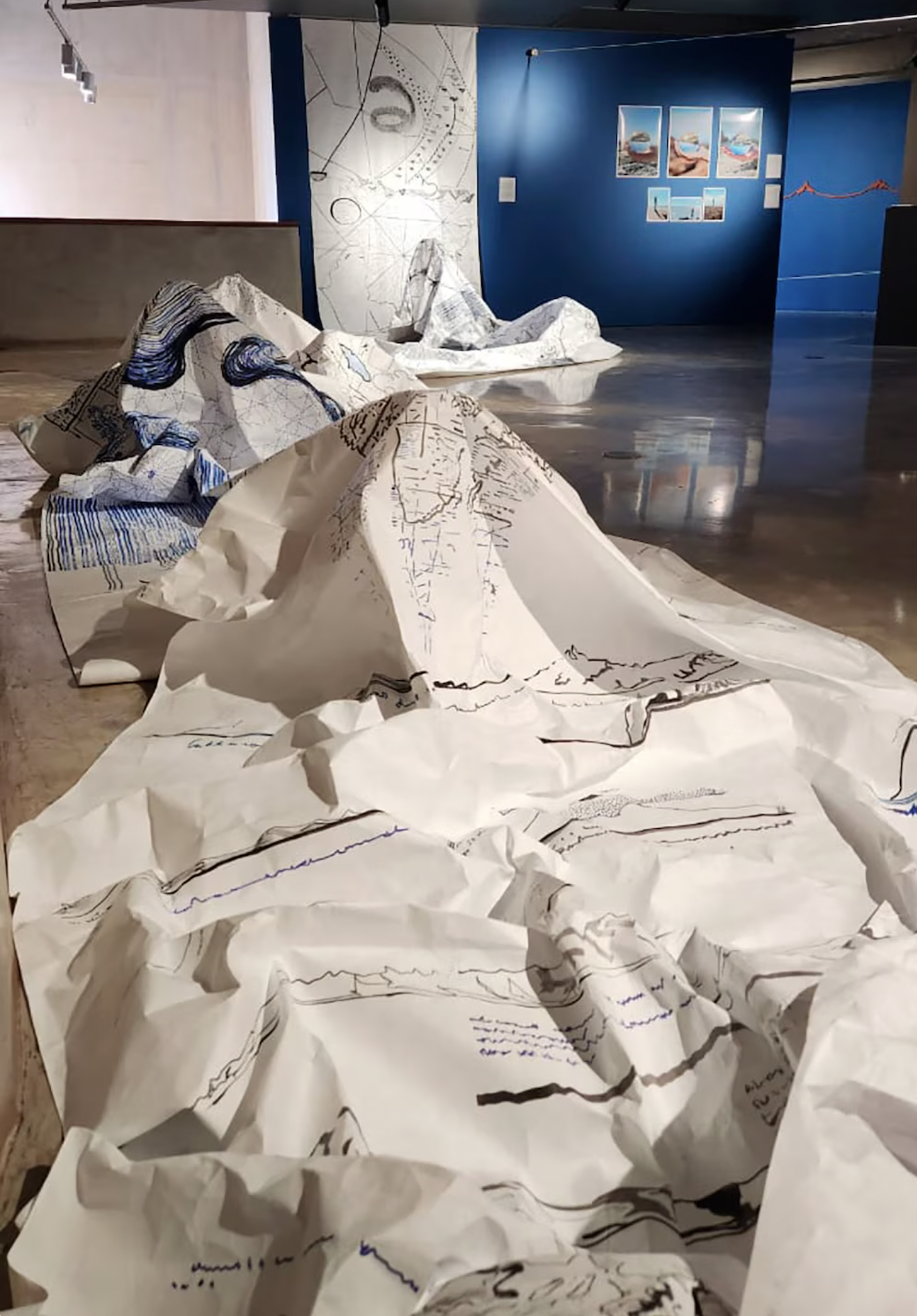
The exhibition brings together a range of interrelated formats: sculptural installations, photographs, sound works, drawings and cartographic archives, as well as editions and objects. Highlights include installations made with stones, soils, and ice; photographic series that explore the horizon as a point of contact between African and South American coastlines; sound works that register the “heartbeat” of the earth; drawings based on historical maps and vitrines with archival materials; and handcrafted editions that expand notions of circulation and drift.
Far from a purely scientific reading, Nuestros Continentes Errantes mobilizes drift as a political and cultural metaphor. Through performative gestures, historical references, and materials drawn from both territories, Cabutti invites a rethinking of imposed separations—geographical, colonial, and symbolic—and imagines new forms of connection between Africa and the Americas, where art emerges as a space of active memory, connection, and repair.
other news
Margarita Paksa Conversation at MALBA – Margarita x Margarita
The best art exhibitions to see in Madrid – Alberto Greco at the Reina Sofía

Puls Andán: When Latin America Beat at the Heart of Paris

Alberto Greco: Viva el arte vivo — Exhibition at the Museo Reina Sofía (Madrid)
Tribute to Osvaldo Lamborghini at the National Library

Galería Del Infinito’s Perspective on the Tribute to Osvaldo Lamborghini
Galería Del Infinito at ESTE ARTE 2026

Conversation with Leo Battistelli | ESTE ARTE

Opening of Margarita Paksa at MALBA
Axel Straschnoy · The Permian Collection · Book presentation Fundación PROA

Martin Reyna · Marzo: Mujer, Memoria y Malvinas · Fondo Nacional de las Artes

Marcela Cabutti · Del cielo a casa · Museum of Latin American Art of Buenos Aires
Federico Manuel Peralta Ramos · El coso · Documentary Space Cycle

Federico Manuel Peralta Ramos · El coso · Documentary film directed by Nestor Frenkel

Alberto Greco · FOLA traveling museum

Del Infinito Gallery · Contemporary and avant-garde art enters the traditional atmosphere of Recoleta

Alberto Greco · Viva el arte vivo · Reina Sofia Museum, Madrid

Julio Le Parc · Quintaesencia · MACA, Punta del Este
Marcela Cabutti · ¡OPI! · MAR Museum, Mar del Plata

Alberto Greco · Viva el arte vivo · Reina Sofia Museum, Madrid, Spain

Estanislao Florido · Salta Museum of Contemporary Art Acquisition

Axel Straschnoy · Naturalia et artificialia · Ipercubo gallery, Milán

Esteban Pastorino · Cities. Dream and dystopia · Kirchner Cultural Center, Buenos Aires

Axel Straschnoy · Cover Ord&Bild

Marcela Cabutti · Floating Explotions · Brick Museum, La Plata

Julio Le Parc · Konex de brillante Award for the visual arts

Esteban Pastorino · Illusory spaces · Tintorería Japonesa, Córdoba

Esteban Pastorino · Illusory spaces · Banco Nación

Marcela Cabutti · Helecheros · Balcarce Museum

Matilde Marín · Pensamiento Situado · OdA

Beto De Volder · ArtNexus Magazine

Matilde Marin · Geumgang Nature Art Biennale 2022 · Korea

Marcela Cabutti · Espejismos · Cazadores Foundation

Esteban Pastorino · Coalescencia · Centro Cultural Rojas

Fabiana Imola · Isla Irupé · Diego Obligado art gallery, Rosario

Marcela Cabutti · UNNE Award 2022

Clorindo Testa · CAYC Chile Argentina 1973-1985-2022 · MNBA

NODO Gallery Circuit 2022

Esteban Pastorino · Distrito Arcos, Buenos Aires

Estanislao Florido · Trabucco Award 2020-22

Le Parc, Testa, Cabutti, Pastorino · Konex Award 2022: Visual Arts

Romina Ressia · PAST PAST FUTURE PAST PRESENT FUTURE… · Düsseldorf, Germany

Clorindo Testa · Grupo de los 5 · Jorge Mara La Ruche gallery

Marcela Cabutti · Tembe’y, orilla · Corrientes City

Axel Straschnoy · Nanocosmic Investigations · Malmö, Sweden

Alberto Greco & Julio Le Parc · Treccani Encyclopedia of Contemporary Art

Estanislao Florido · Dislocations · Fundación Andreani

Alberto Greco · VI Research Conference of the Institute of Performing Arts

Marcela Cabutti · Diálogo Floral · Uruguay

Martín Reyna · Extension du domaine de l’abstrait · Chatou, France

Marín & Florido · Arte en Juego · Fundación Proa

Estanislao Florido · 98 Salón Anual de Santa Fe · Museo Rosa Galisteo

Marcela Cabutti · De materias salvajes y misterios florales · MUSEOCAMPO

Peralta Ramos & Marín · Simbiología · CCK

Marín, Pastorino & Ressia · First traveling photography museum in Argentina

Esteban Pastorino · Fundación Fortabat Award

Estanislao Florido · MAC Salta acquisition · arteBA 2021

Meridiano · 5 years · Argentinian galleries chamber

Alberto Greco & Claudio Abate · Rome Art Week · Casa Argentina in Rome

Florido & Pastorino · Pop UP BAphoto · Patio Bullrich, CABA

Romina Ressia · Solo Show · BAphoto 21

Matilde Marín · BIENALSUR · Riyadh, Arabia Saudita

Matilde Marín · BIENALSUR · Museo Caraffa, Córdoba

Marcela Cabutti · BIENALSUR · Castagnino MACRO, Rosario

Esteban Pastorino · Photographs · Galerie Seippel, Germany

Axel Straschnoy · The Permian Extinction · Turku Art Museum · Turku, Finland

Greco & Heredia · Inventar a la intemperie · Sala PAyS · Parque de la memoria

La luz de una estrella muerta · Paula Klein

Julio Le Parc · Maison Hermès · Tokio

Digital publication: Pharus, del hemisferio Sur al Norte · Matilde Marín

Esteban Pastorino · Punto de encuentro · OdA

Axel Straschnoy · Lights in the landscape · Piippuhalli, Finland

Fabiana Imola · The distances · Castagnino+MACRO

ALBERTO GRECO: ¡QUÉ GRANDE SOS! · Modern Museum

Beto De Volder · NEO POST, 50 años de pintura geométrica en la Argentina 1970-2020 · MACBA

Marcela Cabutti · 97 Salón Anual de Santa Fe · Museo Rosa Galisteo

Matilde Marín · Transformación. La gráfica en desborde · MNG

Exporando la Colección #2 Gyula Kosice / Marcela Cabutti

Julio Le Parc · Casa Daros · Río de Janeiro, Brazil

Julio Le Parc · Palais de Tokyo · Paris, France

Publication: Matilde Marín · Suspended Time

Publication: Libro Objeto Barco Deseos · Marcela Cabutti

Explorando la Colección #07 Alejandro Puente / Estanislao Florido

Publication: The adventure of the real. Writings of Alberto Greco

Mal de Plata. Film about Federico Manuel Peralta Ramos by Juan Carlos Capurro

Matilde Marín · Artslibris

Publication: Alberto Heredia

Julio Le Parc · CCK, MNBA & Colón Theatre

Publication: The bad handwriting. Alberto Greco’s papers

Matilde Marín · Biennial of Havana · Cuba

Marcela Cabutti · Natural Cosmovision · CCR, Buenos Aires

Martín Reyna · Champ Libre. Clairefontaine Chapel · France
