
Publication: The bad handwriting. Alberto Greco’s papers
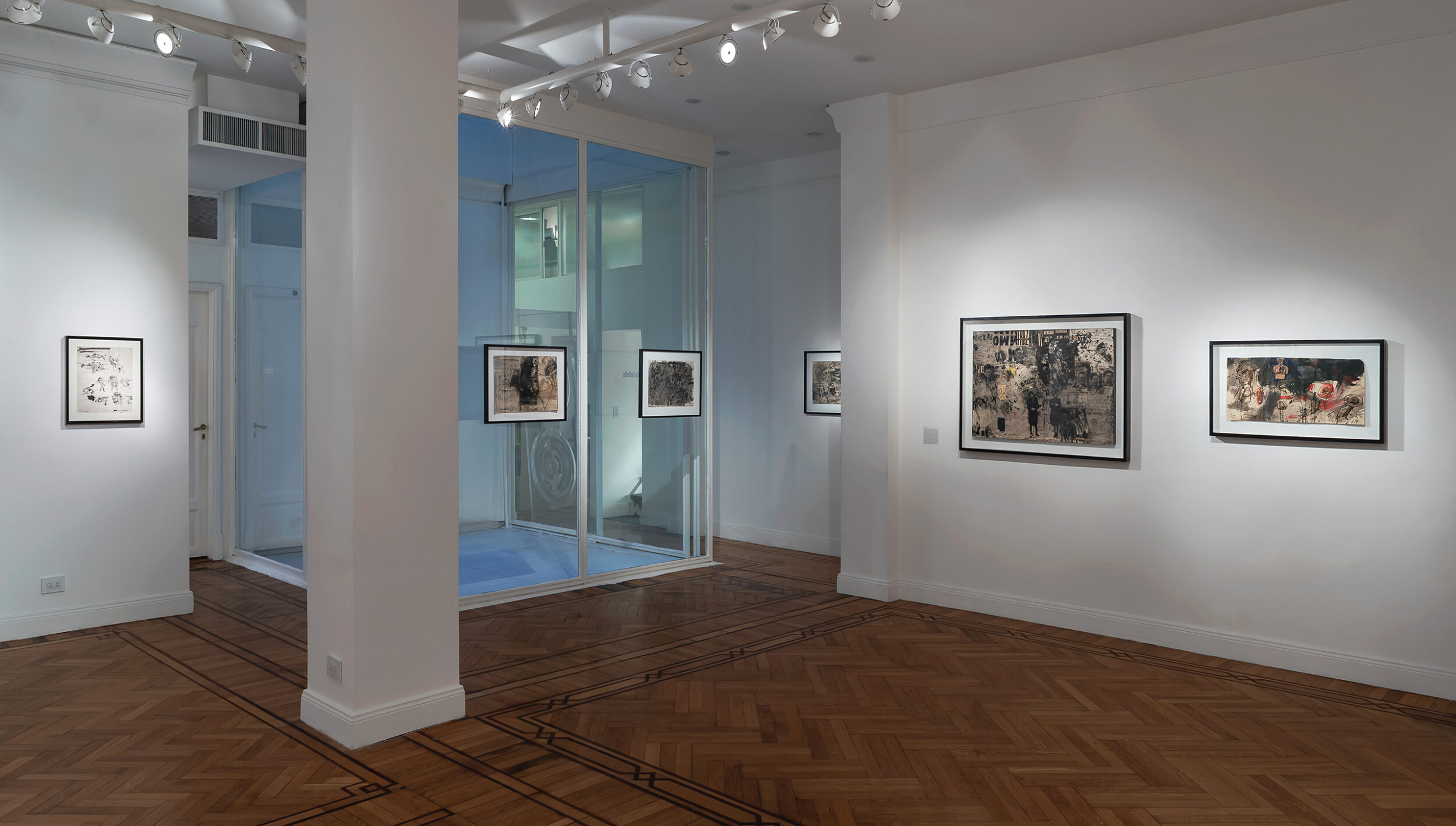
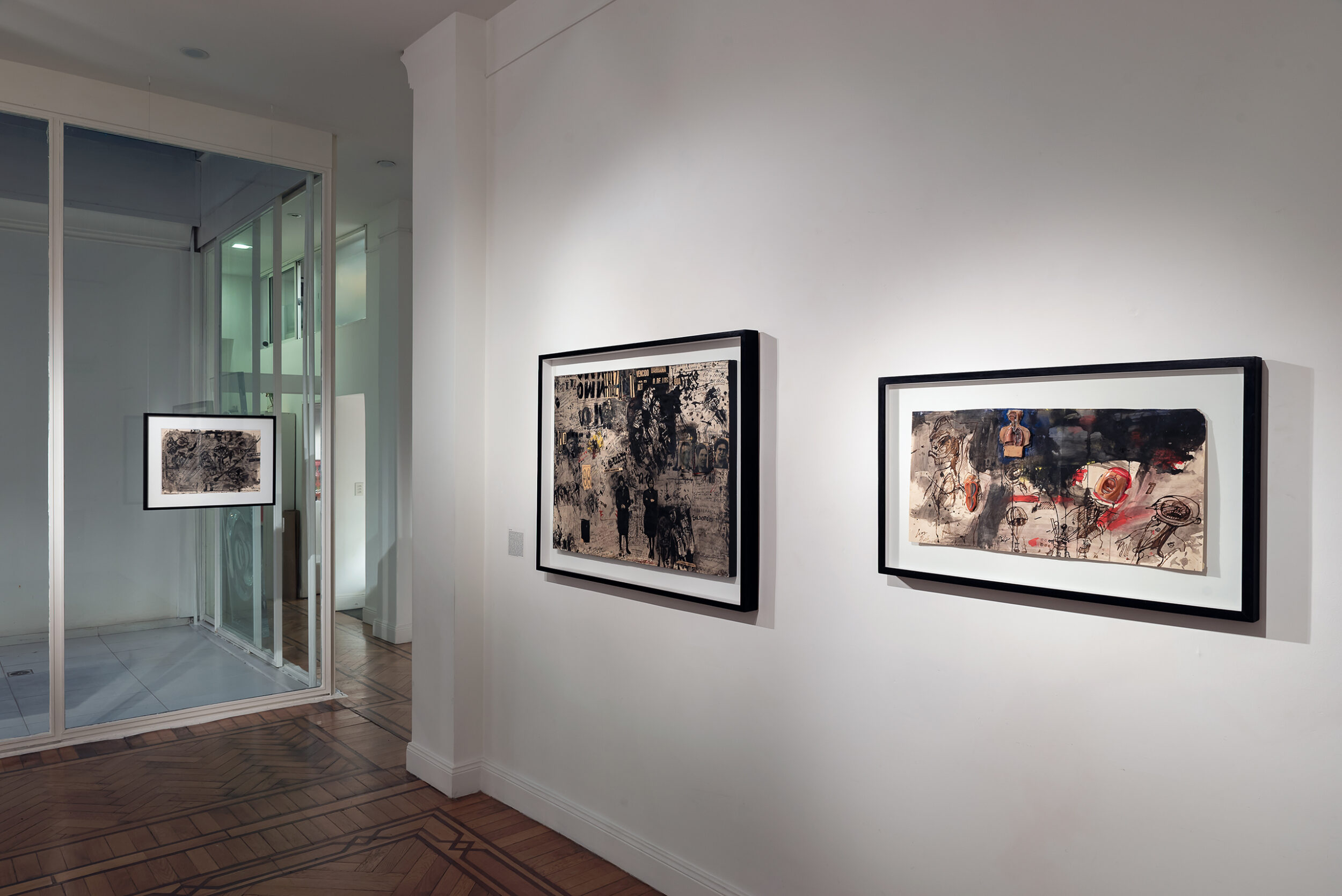
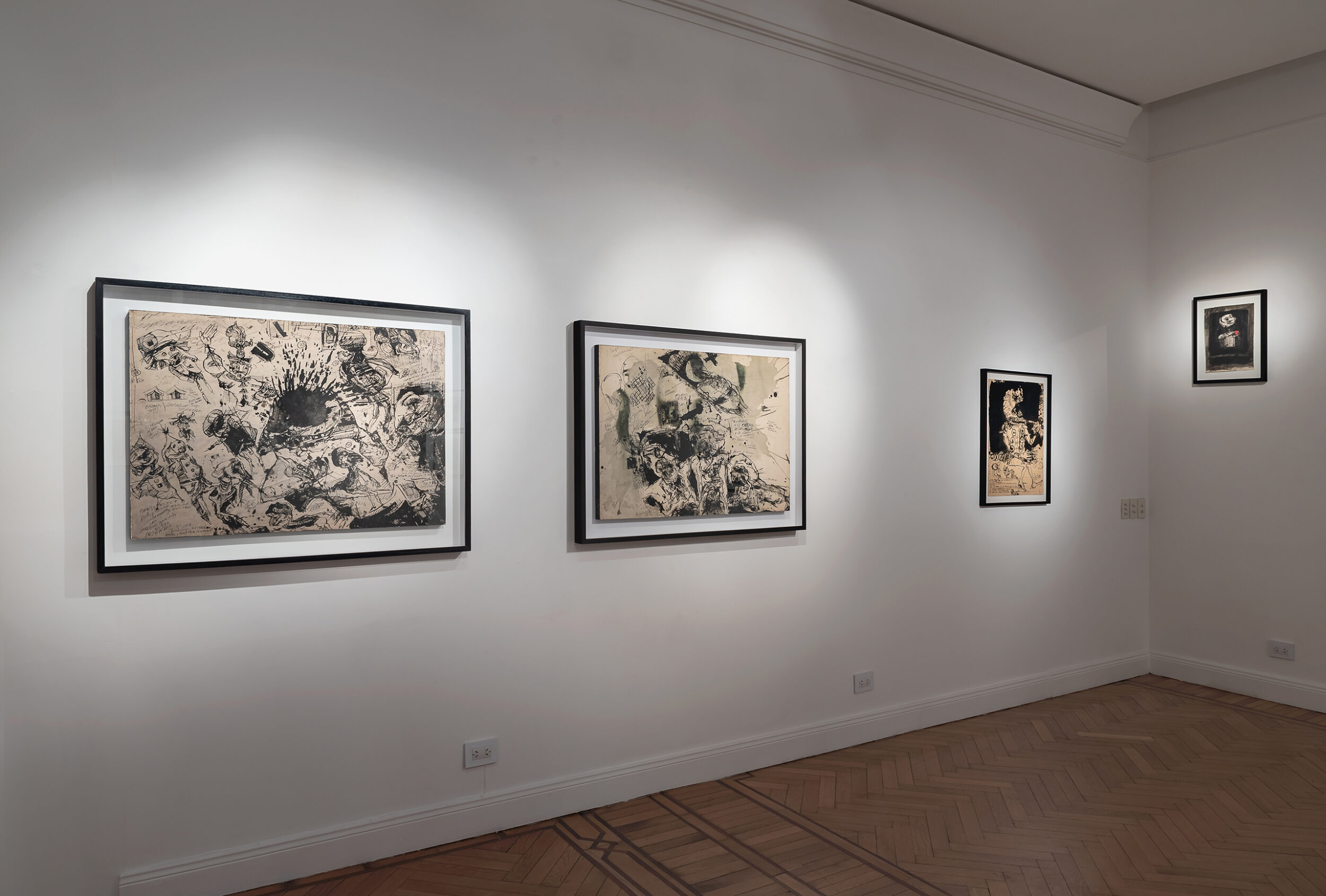
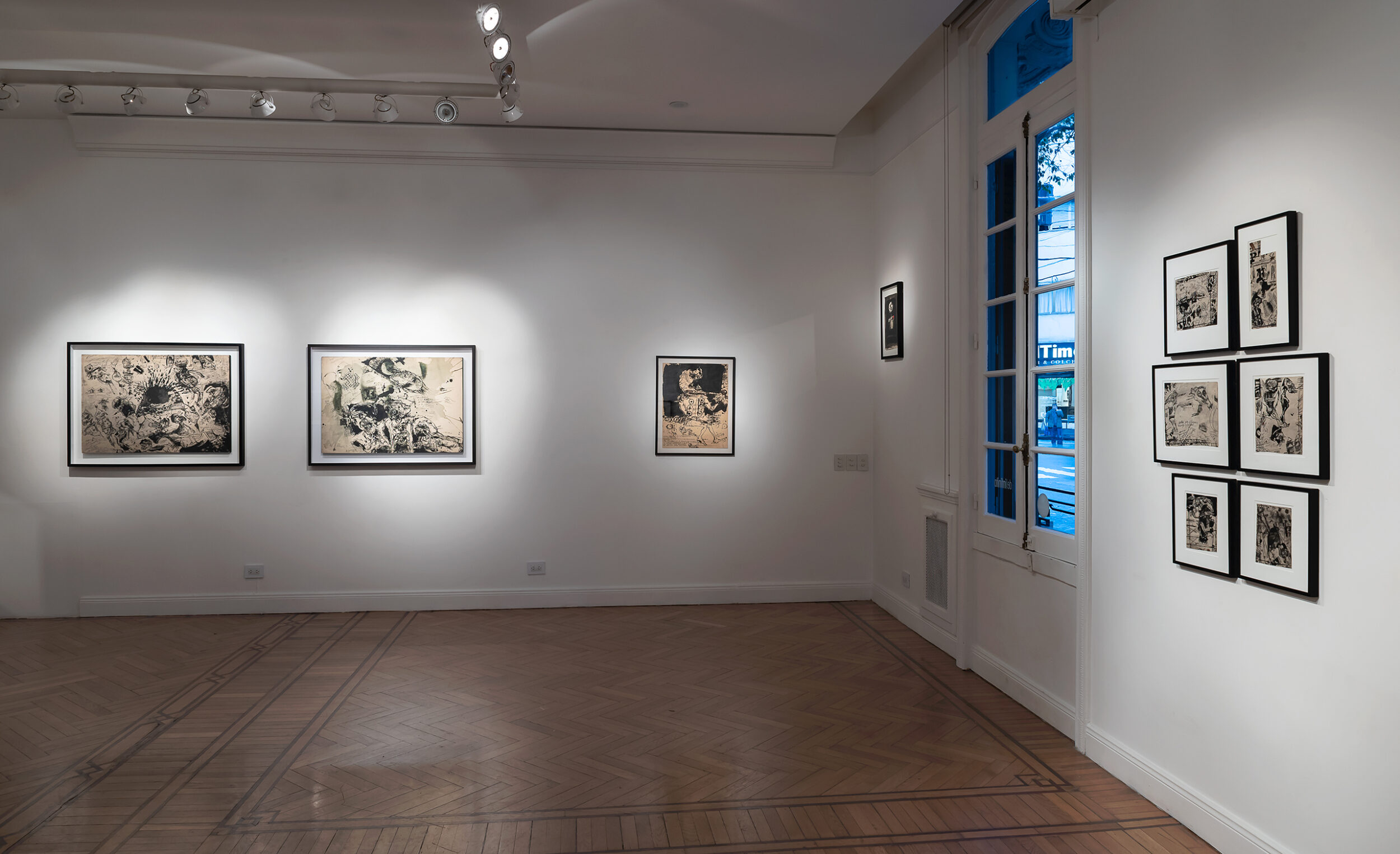
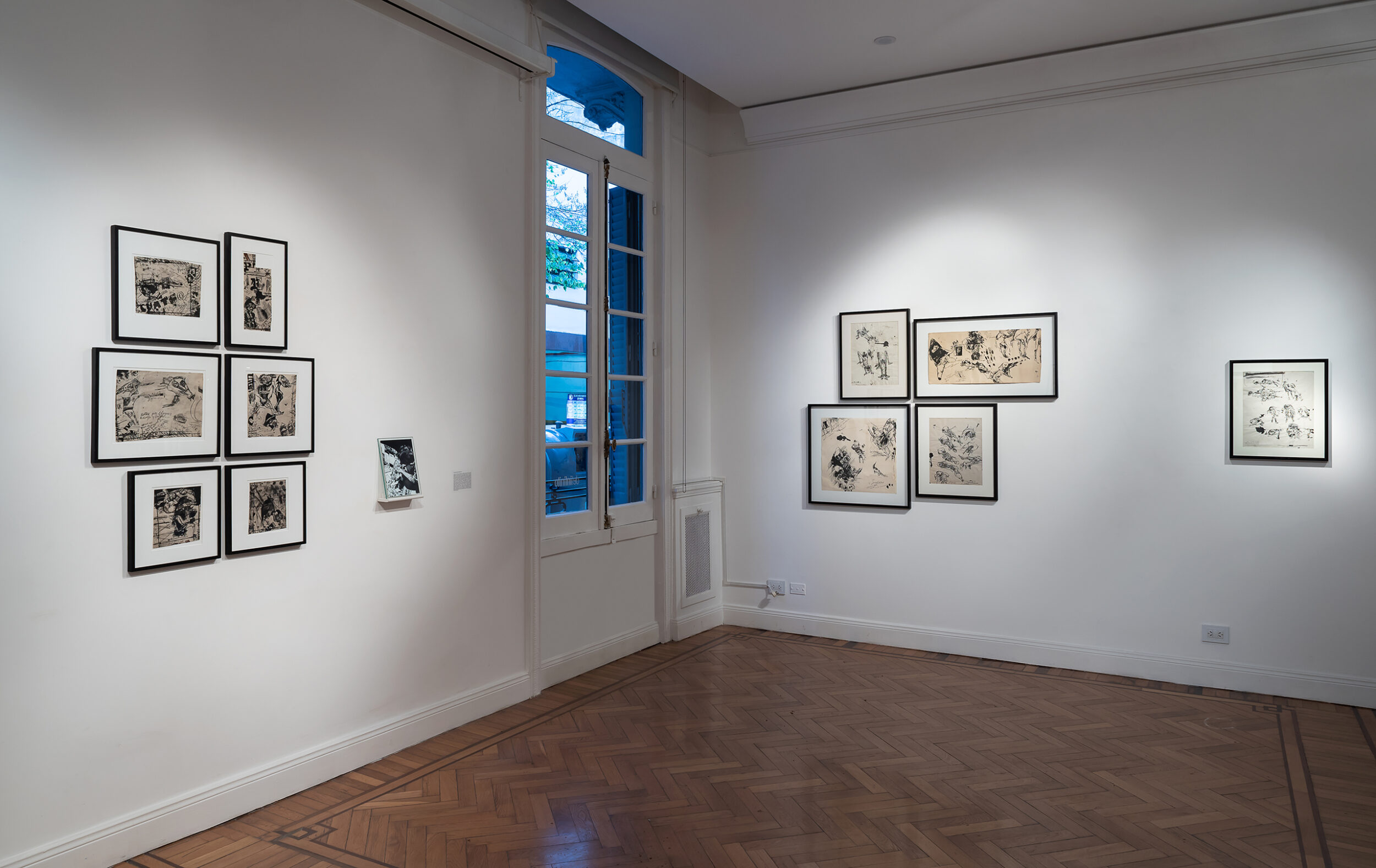
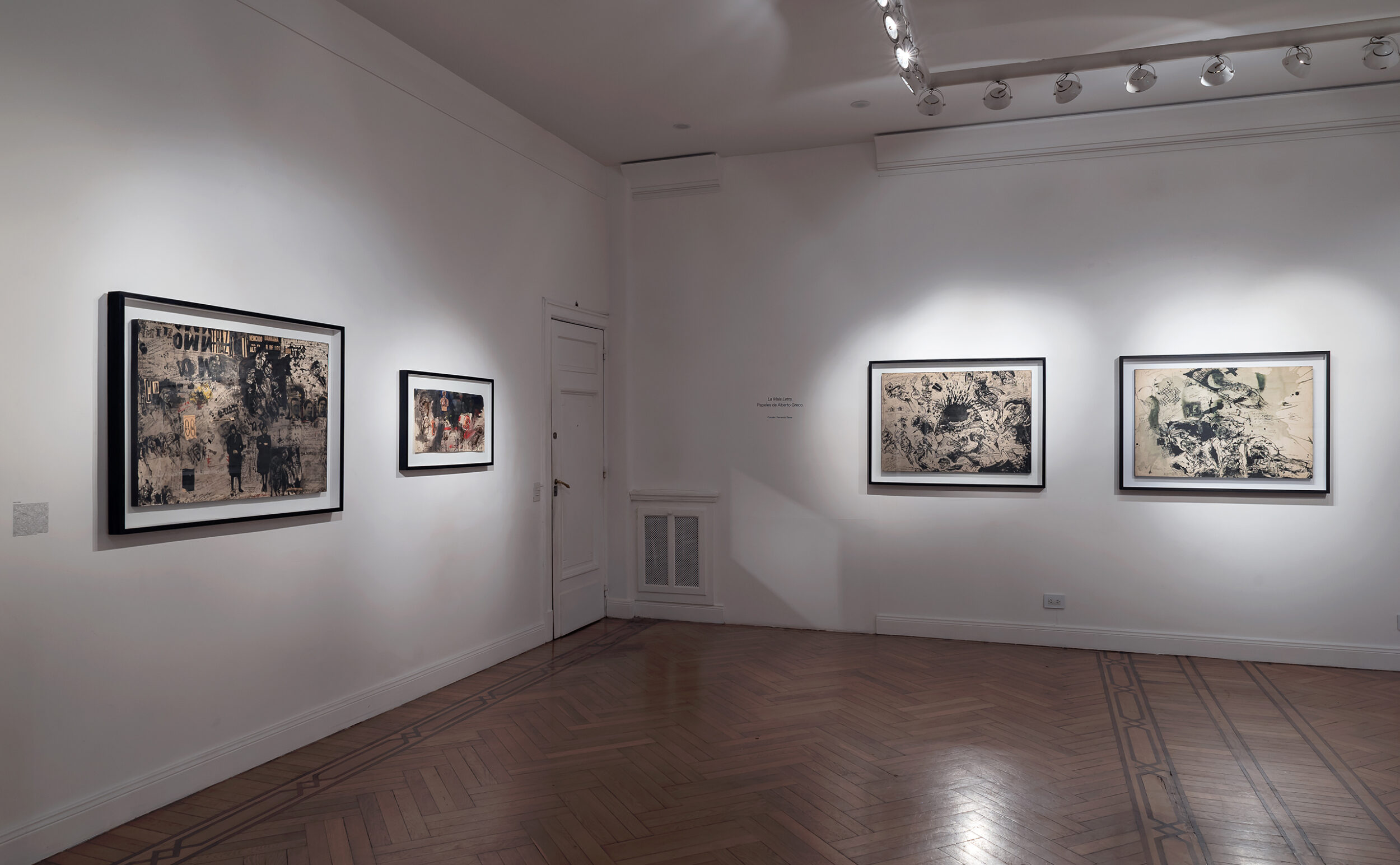
In the drawings he made in Madrid and Piedralaves between 1963 and 1964, Alberto Greco combined heterogeneous fragments and remnants of images and texts that press and involve antagonistic temporalities.
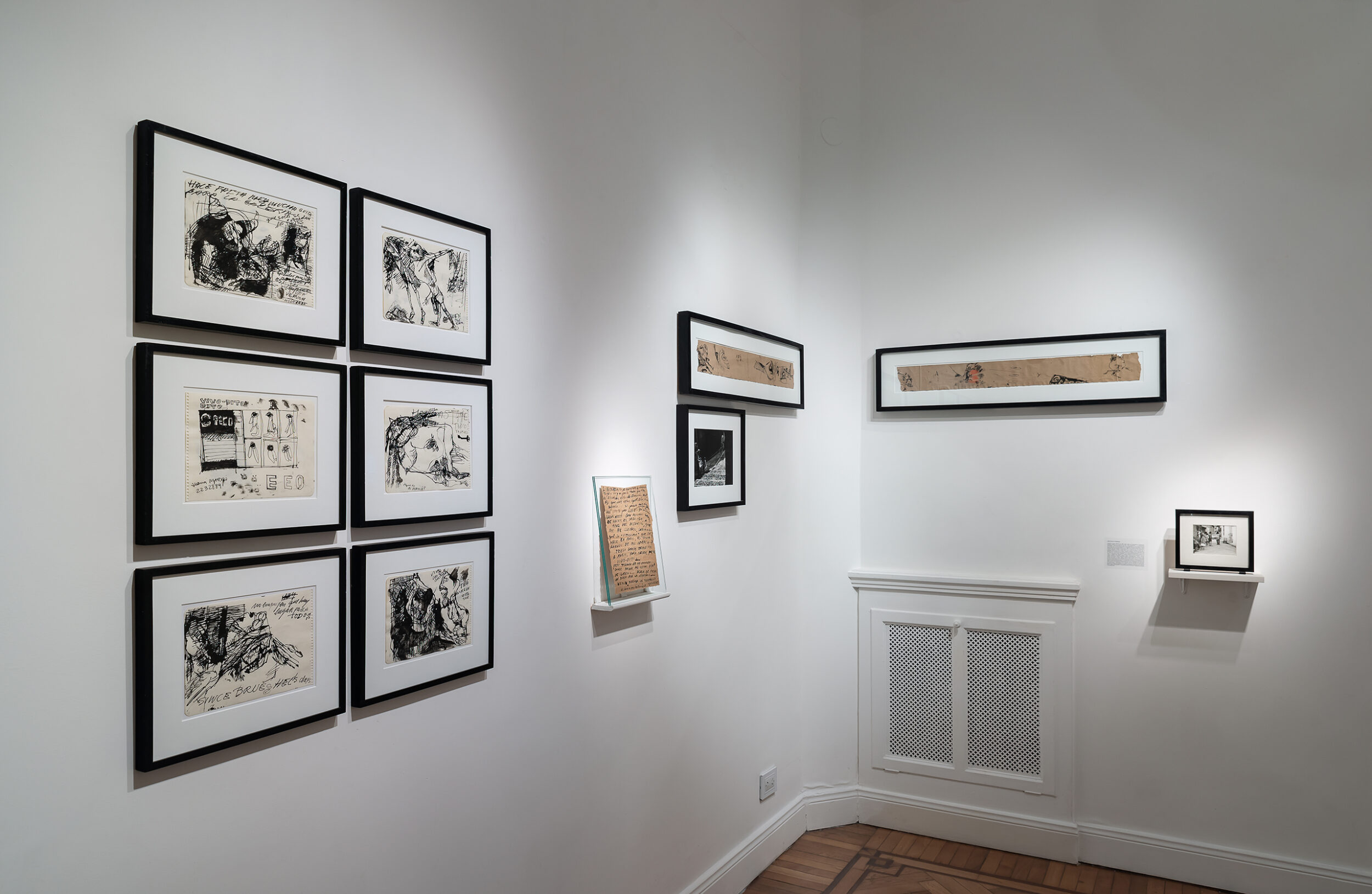
In Antonio Saura’s words, Greco conceived his works as “a journal of additions and overlays, as if obeying an inner seismograph”. The ink stroke proliferates in these drawings of tight and knotted graphics, merging at times into illegible and rabid handwriting, to finally become an indecipherable text. It becomes handwritten, stain, trace, strikethrough, scribble. The “bad handwriting” betrays the correct calligraphy that is molded through a whole disciplinary pedagogy of both body and hand. A bad writing whose flow – inconstant, twisted – obeys the intensities of the body and the experience of drift within the city.
The characters in Greco’s works cross the teratological and the pornographic. The body, open, shown both as penetrable and penetrating, in images that refer to obscene graffiti walls of public toilets, homosexual places that Greco frequented and signed, as he states in the synthetic chronology of his actions of living art included in his Great manifesto-roll art Vivo-Dito. Greco “stains” the drawing with the indecorous traffic of the signs of promiscuous sexuality sanctioned as shameful, which is negotiated in the semi-clandestinity of a bathroom. “Dandy lumpen”, as Diego Trerotola called him, and flâneur puto, Greco makes use as a strategy that crosses its work the act of wandering through the city and the drifting of the body that decentralizes the disciplinary orders of the urban layout in the “lost” time of the strolling, Collage and montage interrupt the continuity of the drawing with marks of a drift in the city, thus spacing text and image. Greco introduces multiple references to urban advertising and the graphic press, popular culture and mass media such as comics, romantic novels or cinema: tango lyrics or pasodoble, references to the Marx brothers or cartoon characters, along with fragments of conversations or stories of his wanderings in the city and typographies that refer to the advertising signs on walls and shop windows.
Writing diagrams a nomadic device that traffics and decentralizes registers and intensities of the word that goes from fictional narration to an autobiographical narrative, from poetry to conversation, from letter to the manifesto. His texts tend to excess and excess, to melodrama and camp, to the eschatological anecdote, and out-of-place stories. Greco dispersed the writing in his drawings, where he included annotations and ideas-in-process that in some cases can be read in dialogue with his literary texts. He used rolls, notebooks, pads to take note of all these. In Madrid, in 1963, he wrote his “police account” Guillotine died guillotined in a pad, intertwining fiction with biographical references. The characters in the text are the people with whom he lived or frequented daily. Guillotine takes as his starting point the assassination of US President JF Kennedy in November 1963 – an episode around which Greco produced a series of paintings and collages – as well as the reference to the murder of his assassin, Lee Harvey Oswald while being transferred to prison. In the notes of Greco’s police account, the character of Alberto wants to kill Torrente, but in turn, it is Torrente who murders him with a shot in a scene that is televised, superimposed on the news of the murder of Oswald. Guillotine can be approached from the assembly procedure with which Greco composed his drawings. The collage introduces cuts and discontinuities in the writing, the plot is delayed between anecdotes of Greco’s adventures in Madrid, absurd dialogues and references to the process itself of writing the text in which he is working on. Towards the end, in a conversation with Brigitte, Alberto complains about the difficulty in concluding his story:
– Guillotin, it’s me … – At last, Gonzalo has insisted so much that you finish the story, that you will end up dying. – But … isn’t he the one who is going to die? – Sure. – But how can you kill him? I’m fed up! The day I got to this house, do you remember Brigitte? […] I told Gonzalo that I wanted to write a police story and that he would do the illustration before reading it… then I went up to my room. I can stand this any more! I am fed up of writing! And I started writing without knowing what to write not what I felt at that time … I was trying to add police elements … the truth is that I never read a story by Gonzalo or anyone else nor a crime or suspense novel. I know the best is Simenon but I never read it … I looked at it at Doña Maura’s house and nothing else… It was well done but I didn’t follow it, I find it impossible to concentrate …
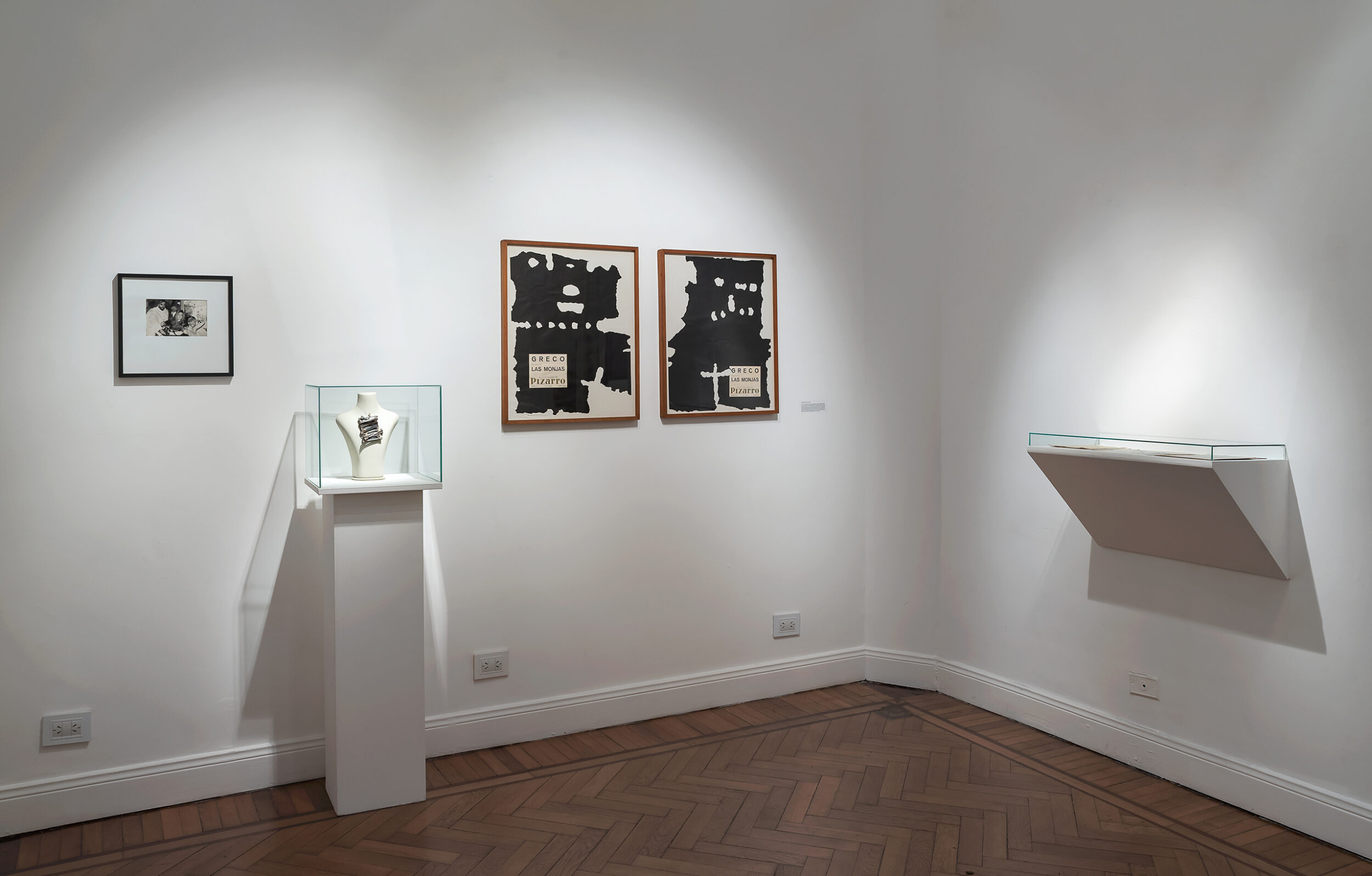
During the Spanish summer of 1963, Greco spent a season in Piedralaves, a town located in the province of Ávila. “Villa Grequissimo” or “el Grequissimo Piedralaves”, as he used to call the place, was the setting in which he carried out a series of Vivo-dito that was documented by photographer Montserrat Santamaría. Greco had started his live art actions in 1962, on the streets of Paris, pointing and signing people, objects, and situations with a circle of chalk. While passing through the city of Genoa, in July of that same year, he coined the concept of Vivo-dito and covered several walls with a poster, printed in Italian, with his “Manifesto Dito dell’Arte Vivo”: “Living art is the adventure of the real. The artist will teach how to see not with the painting but with the finger. Artists will teach us to see again what happens on the street […] We should get into direct contact with the living elements of our reality: movement, time, people, conversations, smells, rumors, places, situations ”. Greco multiplied the insubordinate gesture of the Vivo-dito in every city he visited: Rome, Madrid, Buenos Aires, New York. In Piedralaves he also made his Great manifesto- art roll of Vivo-Dito, an extensive roll of paper about 300 meters long by 10 centimeters wide, which he displayed on the streets in different signs, sometimes with the collaboration of the people of the place. As in the drawings he made back then, the Great manifesto-roll, which Greco was intervening and writing with the course of his actions in Piedralaves, combines the collage of photographs and advertising images, ink drawings, tango lyrics, autobiographical stories, annotations about Vivo-Dito and excerpts from letters and conversations. One of his texts announces: “Greco clarifies and explains his performance in Christ 63 / Tómbolas / Tangos / Crime / Comics / Recipes / Family correspondence”.
The reference to tombolas is present in several of his works. Greco was an enthusiastic and assiduous participant in the tombola games of the popular fairs both in Madrid and Piedralaves and, inspired by them, he projected an exhibition in 1963, which finally never took place. He cut out some of his drawings and placed the fragments in paper envelopes. On the front, he wrote different legends that, like in raffles and popular tombolas, announced a “surprise” content: “Always with the latest news, Greco will inform you. Check its interior ”,“ Each envelope comes with a signed memory ”,“ Your whole family will envy you for having this legitimate Greco”, “Surprise envelope. Check its interior”. Greco intended to turn his exhibition into a raffle, affecting the institutional art orders with the street dynamics and the popular fair.
The tombola is also alluded to in the numbers that Greco drew in his inks and collages from 1963 and 1964. Greco seems to have composed his drawings in episodes, as if they were the draft of a novel, but also as the disordered pages of a notebook. As in his notes, Greco’s drawings record a tremor of writing that scrawls with the body. His works are also constellations, erratic cartographies, secret maps to roam the city.
Fernando Davis
. . .
[1] Antonio Saura, “Glosa with four memories”, Greco, Buenos Aires, National Museum of Fine Arts, 1992, p. 19.
[2] Diego Trerotola, “The painter of the baths”, Page / 12, Supplement Soy, July 29, 2011.
[3] His friend Adolfo Estrada, Ada Barrier and her husband Carlos Mazar, Doña Maura, owner of the Piedralaves house where Greco settled for a season, Manolito, the Gijón cafe waiter, Gonzalo Torrente Malvido (son) and his wife Brigitte, among others.
[4] I am grateful to Paula Pellejero for sharing her research on this little known Greco project.
Press
other news
Margarita Paksa Conversation at MALBA – Margarita x Margarita
The best art exhibitions to see in Madrid – Alberto Greco at the Reina Sofía

Puls Andán: When Latin America Beat at the Heart of Paris

Alberto Greco: Viva el arte vivo — Exhibition at the Museo Reina Sofía (Madrid)
Tribute to Osvaldo Lamborghini at the National Library

Galería Del Infinito’s Perspective on the Tribute to Osvaldo Lamborghini
Galería Del Infinito at ESTE ARTE 2026

Conversation with Leo Battistelli | ESTE ARTE

Marcela Cabutti at BIENALSUR, South Africa venue.

Opening of Margarita Paksa at MALBA
Axel Straschnoy · The Permian Collection · Book presentation Fundación PROA

Martin Reyna · Marzo: Mujer, Memoria y Malvinas · Fondo Nacional de las Artes

Marcela Cabutti · Del cielo a casa · Museum of Latin American Art of Buenos Aires
Federico Manuel Peralta Ramos · El coso · Documentary Space Cycle

Federico Manuel Peralta Ramos · El coso · Documentary film directed by Nestor Frenkel

Alberto Greco · FOLA traveling museum

Del Infinito Gallery · Contemporary and avant-garde art enters the traditional atmosphere of Recoleta

Alberto Greco · Viva el arte vivo · Reina Sofia Museum, Madrid

Julio Le Parc · Quintaesencia · MACA, Punta del Este
Marcela Cabutti · ¡OPI! · MAR Museum, Mar del Plata

Alberto Greco · Viva el arte vivo · Reina Sofia Museum, Madrid, Spain

Estanislao Florido · Salta Museum of Contemporary Art Acquisition

Axel Straschnoy · Naturalia et artificialia · Ipercubo gallery, Milán

Esteban Pastorino · Cities. Dream and dystopia · Kirchner Cultural Center, Buenos Aires

Axel Straschnoy · Cover Ord&Bild

Marcela Cabutti · Floating Explotions · Brick Museum, La Plata

Julio Le Parc · Konex de brillante Award for the visual arts

Esteban Pastorino · Illusory spaces · Tintorería Japonesa, Córdoba

Esteban Pastorino · Illusory spaces · Banco Nación

Marcela Cabutti · Helecheros · Balcarce Museum

Matilde Marín · Pensamiento Situado · OdA

Beto De Volder · ArtNexus Magazine

Matilde Marin · Geumgang Nature Art Biennale 2022 · Korea

Marcela Cabutti · Espejismos · Cazadores Foundation

Esteban Pastorino · Coalescencia · Centro Cultural Rojas

Fabiana Imola · Isla Irupé · Diego Obligado art gallery, Rosario

Marcela Cabutti · UNNE Award 2022

Clorindo Testa · CAYC Chile Argentina 1973-1985-2022 · MNBA

NODO Gallery Circuit 2022

Esteban Pastorino · Distrito Arcos, Buenos Aires

Estanislao Florido · Trabucco Award 2020-22

Le Parc, Testa, Cabutti, Pastorino · Konex Award 2022: Visual Arts

Romina Ressia · PAST PAST FUTURE PAST PRESENT FUTURE… · Düsseldorf, Germany

Clorindo Testa · Grupo de los 5 · Jorge Mara La Ruche gallery

Marcela Cabutti · Tembe’y, orilla · Corrientes City

Axel Straschnoy · Nanocosmic Investigations · Malmö, Sweden

Alberto Greco & Julio Le Parc · Treccani Encyclopedia of Contemporary Art

Estanislao Florido · Dislocations · Fundación Andreani

Alberto Greco · VI Research Conference of the Institute of Performing Arts

Marcela Cabutti · Diálogo Floral · Uruguay

Martín Reyna · Extension du domaine de l’abstrait · Chatou, France

Marín & Florido · Arte en Juego · Fundación Proa

Estanislao Florido · 98 Salón Anual de Santa Fe · Museo Rosa Galisteo

Marcela Cabutti · De materias salvajes y misterios florales · MUSEOCAMPO

Peralta Ramos & Marín · Simbiología · CCK

Marín, Pastorino & Ressia · First traveling photography museum in Argentina

Esteban Pastorino · Fundación Fortabat Award

Estanislao Florido · MAC Salta acquisition · arteBA 2021

Meridiano · 5 years · Argentinian galleries chamber

Alberto Greco & Claudio Abate · Rome Art Week · Casa Argentina in Rome

Florido & Pastorino · Pop UP BAphoto · Patio Bullrich, CABA

Romina Ressia · Solo Show · BAphoto 21

Matilde Marín · BIENALSUR · Riyadh, Arabia Saudita

Matilde Marín · BIENALSUR · Museo Caraffa, Córdoba

Marcela Cabutti · BIENALSUR · Castagnino MACRO, Rosario

Esteban Pastorino · Photographs · Galerie Seippel, Germany

Axel Straschnoy · The Permian Extinction · Turku Art Museum · Turku, Finland

Greco & Heredia · Inventar a la intemperie · Sala PAyS · Parque de la memoria

La luz de una estrella muerta · Paula Klein

Julio Le Parc · Maison Hermès · Tokio

Digital publication: Pharus, del hemisferio Sur al Norte · Matilde Marín

Esteban Pastorino · Punto de encuentro · OdA

Axel Straschnoy · Lights in the landscape · Piippuhalli, Finland

Fabiana Imola · The distances · Castagnino+MACRO

ALBERTO GRECO: ¡QUÉ GRANDE SOS! · Modern Museum

Beto De Volder · NEO POST, 50 años de pintura geométrica en la Argentina 1970-2020 · MACBA

Marcela Cabutti · 97 Salón Anual de Santa Fe · Museo Rosa Galisteo

Matilde Marín · Transformación. La gráfica en desborde · MNG

Exporando la Colección #2 Gyula Kosice / Marcela Cabutti

Julio Le Parc · Casa Daros · Río de Janeiro, Brazil

Julio Le Parc · Palais de Tokyo · Paris, France

Publication: Matilde Marín · Suspended Time

Publication: Libro Objeto Barco Deseos · Marcela Cabutti

Explorando la Colección #07 Alejandro Puente / Estanislao Florido

Publication: The adventure of the real. Writings of Alberto Greco

Mal de Plata. Film about Federico Manuel Peralta Ramos by Juan Carlos Capurro

Matilde Marín · Artslibris

Publication: Alberto Heredia

Julio Le Parc · CCK, MNBA & Colón Theatre

Matilde Marín · Biennial of Havana · Cuba

Marcela Cabutti · Natural Cosmovision · CCR, Buenos Aires

Martín Reyna · Champ Libre. Clairefontaine Chapel · France
