curatorial text
Testa Capsule Biennial '87
In 1987, a selection of Argentine works was sent to the 19th São Paulo International Biennial.
Alongside other artists such as Seguí and Benedit, Clorindo submitted his piece: “Utopia and Reality.”
“We have become accustomed to identifying utopia with illusion, with the impossible. Nothing could be further from the truth. Utopia is not a vain exercise of the imagination. Originating in Greece, it is based on the reality of human effort and, from there, seeks to improve and elevate the individual and collective existence of man—of man on Earth, that is,” wrote Jorge Glusberg in a catalog of the time for the Ruth Benzacar gallery.
Clorindo Testa (1923–2013) was born in Naples, Italy, and just a few months later arrived in Argentina with his family. He grew up in the Recoleta neighborhood of Buenos Aires. After brief and unsuccessful attempts at studying Naval and Civil Engineering, he discovered his true passion in Architecture, graduating in 1947 from the University of Buenos Aires. He was inspired by the ideas of Le Corbusier, the only architect he acknowledged as an influential figure in his architectural thinking.
In 1951, he joined the Urban Planning Department of the Buenos Aires City Government. That same year, along with Boris Dabinovic, Augusto Gaido, and Francisco Rossi, he won the competition to design the headquarters of the Argentine Chamber of Construction—his first built work.
The year 1952 marked a turning point in his career, as he held his first solo art exhibition at Galería Van Riel, thus beginning his dual professional path: both artist and architect.
He married Teresa Bortagaray in 1962, and they spent their honeymoon in India and Europe—destinations he would regularly revisit every two or three years to see relatives and friends. Their daughter Joaquina was born in 1969.
Throughout his career, he designed both public and private buildings, incorporating the distinctive elements of his architectural style: the use of exposed concrete, primary colors, and pure geometric forms. Among his most iconic works are the Bank of London and South America (now Banco Hipotecario) and the National Library of Argentina—both considered paradigmatic examples of Brutalist architecture in the region.
In the following decades, he continued to carry out major projects such as the Central Naval Hospital—whose design reflects his passion for ships—and other emblematic buildings in Buenos Aires’ urban landscape, including the Paseo del Pilar (now Buenos Aires Design), the auditorium of the Soka Gakkai Buddhist Center, and the Museum of the Book.
A portion of his work was devoted to designing private residences, both within and beyond the boundaries of the capital, always maintaining a distinctive and recognizable style.
His visual art was inseparable from his architectural work: his entire output was shaped by ongoing reflections on themes such as large cities and living conditions in urban environments.
In 1957, he joined the Group of Seven Abstract Painters, later associated with Revista Boa, and from 1958 he collaborated with the Group of Five. In 1975, he became an active member of the Group of Thirteen at the CAyC (Center for Art and Communication), with whom he regularly exhibited until 1994. From then on, he frequently showed his work in galleries and museums across Argentina, both individually and as part of group exhibitions, as well as in national and international biennials.
Among his most notable series are: Compositions in Black and White, The Plague in Ceppaloni, Measurements, Screams, Blocks of Buenos Aires, and Grids.
His works are part of numerous public and private collections, including: the Amalia Lacroze de Fortabat Art Collection (Buenos Aires), the Argentine Foreign Ministry Collection (Buenos Aires), the Museum of Latin American Art of Buenos Aires (MALBA), the National Endowment for the Arts (Buenos Aires), the Museum of Modern Art (MAMBA), the National Museum of Fine Arts (MNBA), and the Museum of Modern Art (MoMA) in New York, among others.
He passed away in Buenos Aires on April 11, 2013.

view more
exhibition


other exhibitions
Emilio Pettoruti, Xul Solar · 13.11.2024 - 31.01.2025
New World

Greco, Paparella, Berni, Gallardo, B. Network, Renart, F. Dinasty, Peralta Ramos, G. Rubio, Kosice, García Miranda, Sánchez, Gumier Maier, De la Vega, Mabel, Mia Miguita Superstar, Lamborghini, P. Klenik, Lozza, Polesello · 28.02.2025 - 23.04.2025
The clash

Osvaldo Lamborghini · 15.08.2024 - 17.10.2024
Yo soy tu proveedora

Emilio Renart · 10.05.2024 - 29.07.2024
Constancy of the specie

Axel Straschnoy, Beto De Volder, Clorindo Testa, Emilio Pettoruti, Enio Iommi, Esteban Pastorino, Gyula Kosice, Manuel Espinosa, Marcela Cabutti, Matilde Marin, Rogelio Polesello, Romina Ressia, Romulo Macció · 12.12.2023 - 15.02.2024
Indefinit
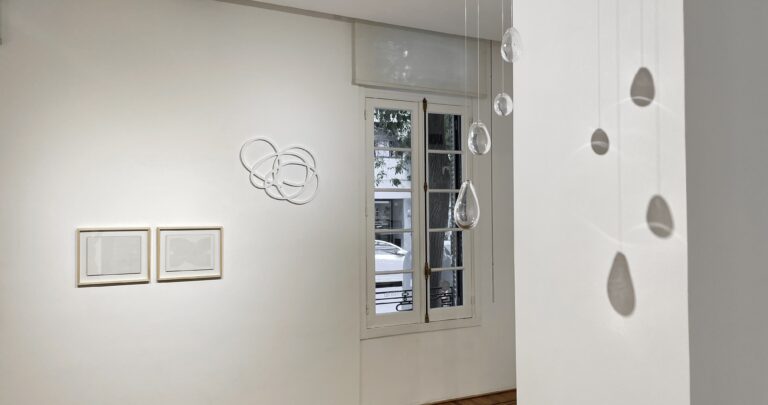
Axel Straschnoy · 02.11.2023 - 29.12.2023
Brave the Heavenly Breezes

André Komatsu, Enio Iommi, Clorindo Testa · 23.08.2023 - 31.10.2023
Hiato
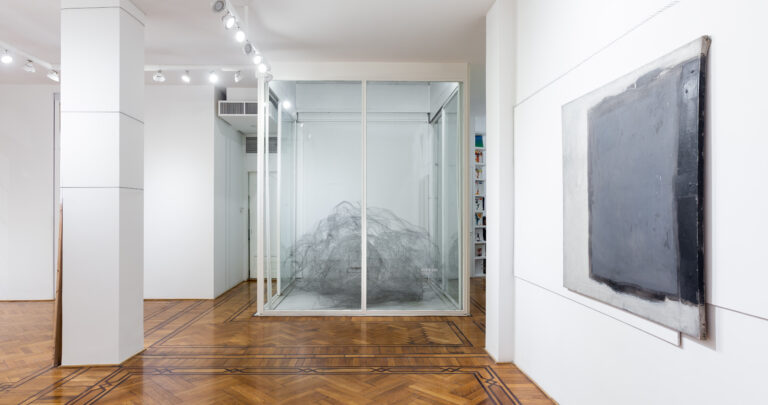
Mariela Vita · 12.07.2023 - 16.08.2023
GEJIGEJI

Polesello, Aizenbeg, Kosice, Vardanega, Le Parc, Iommi, Puente, Arden Quin, Espinosa, Demarco, Straschnoy, De Volder, Pastorino, Imola, Batistelli, Cabutti, Reyna · 09.02.2023 - 15.03.2023
Eléctrico/ ecléctico

Fabiana Imola & Aníbal Brizuela · 16.09.2022 - 02.12.2022
Inside, the shapes. They move alone

Romina Ressia · 09.06.2022 - 25.08.2022
Grow flowers

Martín Reyna · 11.03.2022 - 03.06.2022
Color in transit

Matilde Marín · 08.02.2022 - 02.03.2022
25FPS

Clorindo Testa · 11.11.2021 - 31.01.2022
Testa, projects and other games

Cabutti, De Volder, Reyna, Imola, Ventoso, Ressia. · 05.10.2021 - 22.10.2021
Group Show 2021 II

Matilde Marín · 23.07.2015 - 21.09.2015
Undetermined landscapes

Marcela Cabutti · 16.07.2021 - 22.09.2021
Balcarce, topographic memories of a landscape

Benito Laren · 12.05.2012 - 22.06.2012
Casino

Lila Siegrist · 26.06.2012 - 27.08.2012
Vikinga Criolla

Cárdenas, Imola, Marin, Res, Sommerfelt, Ventoso · 10.08.2012 - 11.10.2012
Morphological confrontations

Martin Reyna · 20.09.2012 - 20.11.2012
Reyna in the horizon of color

Romina Orazi · 04.12.2012 - 04.02.2013
Subject to infinite division

Aizenberg, Boto, Espinosa, Iommi, Lozza, Le Parc, Kosice, Silva, Tomasello, Vardánega · 01.06.2013 - 31.07.2013
Dimensional

Antoniadis, Marín · 07.09.2013 - 07.11.2013
Double contrast

Andrés Sobrino · 28.03.2013 - 30.05.2013
Andrés Sobrino

Antoniadis, Cabutti, Laren, Reyna, Florido, Sobrino, Straschnoy, Tarazona, Ventoso · 20.12.2013 - 15.02.2014
Universus

Elena Dahn · 25.03.2014 - 26.05.2014
Elena Dahn

Marcela Cabutti · 15.07.2014 - 15.09.2014
Finding meaning through shapes

Axel Straschnoy · 12.11.2014 - 19.01.2015
La Figure de la Terre

Fusilier, León, Quesada Pons y Vega · 15.03.2015 - 30.04.2015
Limbo

Luciana Levington · 28.05.2015 - 24.07.2015
Luciana Levinton

Leo Battitelli · 12.11.2015 - 12.01.2016
Gargalhadas

Hasper, Scafati · 10.02.2016 - 11.04.2016
Womens’ double

Axel Straschnoy · 12.05.2016 - 13.06.2016
Today, great tomorrow!, in the pines wind blows from the past.

Arden Quin, Boto, Demarco, Espinosa, Iommi, Le Parc, Lozza, Polesello, Puente, Silva, Testa, Tomasello · 07.06.2016 - 05.08.2016
Masters of the avant-garde

De Volder, Sobrino · 11.08.2016 - 10.10.2016
Andres Sobrino and Beto De Volder

Battistelli, Cabutti, Cacchiarelli, Sobrino, De Volder · 02.01.2017 - 28.02.2017
2017 Group Show

Fabiana Imola · 28.02.2017 - 14.04.2017
The forest, the rain and other scenes

Alberto Heredia · 06.09.2017 - 11.10.2017
Alberto Heredia

Federico Manuel Peralta Ramos · 31.10.2017 - 29.12.2017
Federico Manuel Peralta Ramos

Marcela Cabutti · 10.11.2017 - 31.01.2018
About the effective distance between objects

Luciana Rondolini · 15.02.2018 - 15.04.2018
End

Estanislao Florido · 27.04.2018 - 01.07.2018
The disenchanted object

Battistelli, Cabutti, Marín, Straschnoy, Ventoso, De Volder · 06.07.2018 - 31.08.2018
2018 Group Show

Rogelio Polesello · 06.09.2018 - 20.12.2018
Vortex

Cabutti, Imola, Marín, Reyna, Rondolini, Straschnoy, De Volder · 27.02.2019 - 03.04.2019
2019 Group Show

Alberto Greco · 04.04.2019 - 31.08.2019
The bad handwriting

Matilde Marín · 25.09.2019 - 31.12.2019
As the blue smoke of Ítaca is spotted

Esteban Pastorino · 10.09.2020 - 29.01.2021
Pastorino

Marín, Imola, De Volder, Reyna, Florido, Straschnoy, Pastorino · 08.02.2021 - 01.04.2021
2021 Group Show

Alberto Greco · 06.04.2021 - 30.06.2021
LA PITTURA È FINITA. Poses and impostures of Alberto Greco in Italy
