
curatorial text
Curador Javier Villa
Nuevo mundo
Emilio Pettoruti | Xul Solar
A century after the first irruption of the avant-garde in Argentina.
Exactly 100 years have passed since that initiatory irruption that lit the fuse for the explosion of modern art in Argentina. The protagonists were two great friends: Emilio Pettorutii and Xul Solar, who, in July 1924, decided to return together to their beloved homeland, as they called it in their letters. The letters between the two make it clear that the return was a desire that never waned, as well as an ever-present possibility. The agreed plan was to exhibit together as soon as they arrived in Buenos Aires, and put up a fight. But, finally, it was Pettoruti’s mythical and controversial solo exhibition at the Witcomb Salon, with the intellectual and pugilistic defense of Xul Solar and the literary group concentrated around the Martín Fierro magazine, the spearhead or the eye of the incipient hurricane that began to unleash that centrifugal force capable of changing forever the way of looking at our world and representing it.
With the certainty that society should not forget this centennial anniversary, together with the Pettoruti Foundation and the Pan Klub Foundation, Del Infinito decided to recall and reinterpret -from the boldness and rebelliousness demanded by a tribute of this caliber- that foundational and transforming moment for the history of local art.
Curated by Javier Villa, the exhibition tells the story of two close friends whose paths were destined to intertwine. As if they were the prehistoric beginnings of a DNA chain of local painting, the European adventures of Xul Solar and Pettoruti seem to cross paths and drift apart, but never too far apart to come closer together. In some cities they lived together, in others they vacationed. They sold works on the street as a means of survival. They self-organized exhibitions and wrote cross reviews to support each other. They shared evenings until dawn discussing the most varied topics, either alone or with the avant-garde groups of the day. They enjoyed and understood each other’s vision despite their differences. They returned in the same boat because they knew that the desire to build a new world is only possible by pushing it together.
The exhibition design of New World was inspired by the labyrinthine architectures of Xul Solar and the play between full and diaphanous planes that Pettoruti applied to investigate light. The story is told from compartments or blocks that, although clearly delimited, are intertwined through translucent walls to generate both contamination and continuity between the ideas of both artists, their works and the passage of time. The exhibition presents more than 50 pieces, some key and already emblematic in the history of each of the artists, others that have been rarely seen and even some that will be unpublished for the eyes of the public.
The narrative blocks recover three moments of the European journey. The first encounter and the street sale of small landscapes to guarantee survival. The event of the avant-garde break that opens a new portal in each of their practices, being Pettoruti’s at the beginning of his journey (1913-14) before the impact of futurism and Xul Solar’s at the end of that adventure (1924) when he meets Aleister Crowley and begins to use the method of clairvoyance to reach his visions and the Saint signs. Finally, the third European block recovers the longed-for landscape from a distance, which will provoke both formal and symbolic evolutions: in the case of Pettoruti in relation to the forests of La Plata and in the case of Xul Solar on the buildings and nature of Tigre.
A fourth block confronts three imposing pieces by both artists 20, 30 and even 40 years after their return to Argentina. Pettoruti’s Farfalla is emblematic of the artist’s final period when he returned to Europe and returned to abstraction inspired by nature, under a search for a more spiritual or, at least, meditative formal transformation. In the case of Xul Solar, both 7 Rishis and Pan Tree are works that mark the process and culmination of the artist’s mystical maturation.
The exhibition ends where it all begins, with a block that reconstructs in a peculiar way Pettoruti’s exhibition at the Witcomb Salon, as well as the polemics it incited in the press and the incendiary debates between the various factions of art, which often ended in physical and intellectual battles. This reconstruction was made from the original files with which Pettoruti himself began to organize his own history and career; today one of the hearts of the archive cared for by the Pettoruti Foundation. On display are some twenty cards of works that, based on research, we know for certain were exhibited at Witcomb. Also on display are three original still life inks, very similar to the works of that time. Around these tables and observing the exhibition, a series of 12 never-before-exhibited drawings by Xul Solar play the role of spectators and competing groups. The space is thus transformed into a hybrid between the exhibition hall and the bar, the ring where the controversies raised by the irruption of the avant-garde in the Buenos Aires scene were settled.
New World
Emilio Pettoruti | Xul Solar
Curated by Javier Villa
A century after the first irruption of the avant-garde in Argentina.
Exactly 100 years have passed since that initiatory irruption that lit the fuse for the explosion of modern art in Argentina. The protagonists were two great friends: Emilio Pettorutii and Xul Solar, who, in July 1924, decided to return together to their beloved homeland, as they called it in their letters. The letters between the two make it clear that the return was a desire that never waned, as well as an ever-present possibility. The agreed plan was to exhibit together as soon as they arrived in Buenos Aires, and put up a fight. But, finally, it was Pettoruti’s mythical and controversial solo exhibition at the Witcomb Salon, with the intellectual and pugilistic defense of Xul Solar and the literary group concentrated around the Martín Fierro magazine, the spearhead or the eye of the incipient hurricane that began to unleash that centrifugal force capable of changing forever the way of looking at our world and representing it.
New World tells the story of two close friends whose paths were destined to intertwine. As if they were the prehistoric beginnings of a DNA chain of local painting, the European adventures of Xul Solar and Pettoruti seem to cross paths and drift apart, but never too far apart to come closer together. In some cities they lived together, in others they vacationed. They sold works on the street as a means of survival. They self-organized exhibitions and wrote cross reviews to support each other. They shared evenings until dawn discussing the most varied topics, either alone or with the avant-garde groups of the day. They enjoyed and understood each other’s vision despite their differences. They returned in the same boat because they knew that the desire to build a new world is only possible by pushing it together.
The exhibition design of New World was inspired by the labyrinthine architectures of Xul Solar and the play between full and diaphanous planes that Pettoruti applied to investigate light. The story is told from compartments or blocks that, although clearly delimited, are intertwined through translucent walls to generate both contamination and continuity between the ideas of both artists, their works and the passage of time. The exhibition presents more than 50 pieces, some key and already emblematic in the history of each of the artists, others that have been rarely seen and even some that will be unpublished for the eyes of the public.
The continuity of the forests
The first known works by Xul Solar made in Europe are small landscapes from 1913 made with watercolor on paper. Most of them are forests or trees whose possible destination was the street sale to achieve a certain economic subsistence. Pettoruti also painted wooded landscapes for this purpose, in parallel to his abstract compositions influenced by the Futurist vision. Like the 1916 landscape of Zoagli, an Italian village where Xul’s mother and aunt lived, which he painted during the first summer they spent together. Or like the trees of a small village street on the plane that Pettoruti occupies in the only bifacial work shared by the two friends.
These incursions into nature should not be appreciated only as a commercial speculation, but were part of the initiatory themes in the work of both artists; a theme that will have its symbolic charge, its evolutions and disarmament during the European period, and a return as cyclical as transforming towards the end of their lives. They are landscapes that could emerge from the mixture between those they inhabited in Europe and the local landscape longed for and retained somewhere in their memory. For Pettoruti, the nostalgia of the trees of the La Plata forest will accompany him in every canvas, as he himself assured in his autobiography. For Xul Solar, El Tigre is a place in the world that unites his childhood and his old age, where he projected a forest as his last wish in life.
Portals
In parallel to these natural and figurative landscapes, the next block concentrates on the occurrence of the break that opens a new portal in each of his practices. Pettoruti’s occurred at the beginning of his journey (1913-14) in the face of the impact of Futurism. “What obsessed me most was the idea of movement; hence I went day after day to visit the unusual exhibition in the hope, always disappointed, of capturing that movement that I did not see (…) I made numerous drawings, seeking to translate the movement and speed, as I felt them. After much doing and much breaking, it was only in mid-1914 that I managed to make some things that reassured me a little (…)”. The drawings he mentions, part of a series exhibited here, can be counted among the first examples of pure abstraction at a global level, a few years after artists such as Kandinsky or Malevich, and undoubtedly the first works of the genre made by an Argentine painter.
La Plata and Vallombrosa.
In 1917, four years after arriving in Europe, Pettoruti painted the forests of La Plata. The nostalgia and centrality that this landscape concentrates, both on an emotional and formal level, is established in his writing: “The colors and forms that I retained as a child I carried with me wherever I went and they are in my canvases. This city had squares of incomparable greenery and a magnificent eucalyptus forest where my grandfather’s “birloche” or our horses slowed their pace to better breathe the scent of the foliage; a dream forest that building vandalism took charge of devastating to amass the wood of its giant trees”. The motif of one or two trees in the center of the canvas, with two or four large branches, will be repeated throughout these years, in which, at the same time, he fragments planes and pursues compositional synthesis. This new formal path arises from a particular mixture between the new proposals of the avant-garde, especially futurism and cubism, his study of the enormous classical tradition of Italian art and the learning of crafts such as mosaics and vitreaux. The latter, above all, will be fundamental in his research on the segmentation of planes and the search for a solid and material pictorial light, autonomous from the real light, as it will appear from Vallombrosa onwards.
It is not necessarily a direct evolutionary path, as he goes back and forth from the forests of La Plata to the Italian forests, from figuration to abstraction. But it is Vallombrosa, a painting that has only two versions, an important point of arrival. “My temperament was in search of something else, which, if I’m not mistaken, found its beginning of execution in some collages, in the first oil versions of my Vallombrosa notes and in some drawings”. The version exhibited here was presented in his first individual exhibition in 1916, at the Gonnelli Gallery, under the title Foresta.
Tigre and the last forest
In 1917, six years after arriving in Europe, Xul Solar painted a landscape of Tigre. Born in San Fernando, the Delta was undoubtedly a longed-for childhood place. By 1954, Xul would finally have his property in Tigre, which he named Li-Tao, where he would move, almost definitively, at the end of the 1950’s. Although in his work there are imaginary cities of elevated houses since 1925, the numerous series of paintings on projects for delta facades begin that same year of 1954. From 1958 to 1963, one of the activities that occupied him long hours in his atelier in Li-Tao was the creation of his graffiti, 237 painting-writings that compose texts to be deciphered by the reader or viewer. Some of these graffiti grow like trees or forests, and formally resemble the architectural stacks of his Delta facades.
In 1963 Xul Solar died in his house in Tigre. One of his last projects was to plant a forest around Li-Tao, which would be completed by Lita and a group of friends after his death. The exhibition begins with the small forest drawings he made in 1913 (the earliest dated works in the catalog raisonné), possibly taken from life in Zoagli, Italy, where his mother and aunt lived. It concludes with his last project, composing a real forest in the landscape where he decided to spend the end of his life.
Farfalla, 7 Rishis
In 1953, Pettoruti returned to Europe where he lived until his death in 1971. During this last period, and after almost three decades in Argentina, he returned to abstraction, generating a circular end to his career. The Farfallas series, among others, leaves behind urban themes such as musicians, harlequins or glasses and opens a space for nature to return as a compositional inspiration and, why not, symbolic. The movement of transformation of the Farfallas is more harmonious and meditative than the concentrated and then expanded by the radical and spiral energy in his drawings of 1914. It is a slow transformation, sedimented and built by years of experience, rather than a high-speed transformation brought about by the impact of the new. Both, however, are portals. In both there is a potential center; either the opening that provokes an abysmal vanishing point into the new world or the light as a beacon, or comforting nucleus of the journey made.
7 Rishis, by Xul Solar, is also a portal. Unlike Rezue, which visually narrates the method of meditation and access to the vision of Xul himself, this work represents the collective meditation of the 7 sages of Hinduism and their connection with the Supreme Being… It is possible that this painting, unique in its scale, was intended for the context of a group initiated in meditation or hermetic order. Here, the seven sages seem to be beginning to detach the astral plane from their material bodies, while in the center of the composition appears a portal to the interior of nature, unlike the portal of symbols that Xul passes through after learning the method of meditation with Aleister Crowley before leaving Europe.
Pan tree
The paintings of Man plantas, Man trees or Androdendros that he made in the middle of the decade of 1910 at the beginning of his practice as an artist, take the tree from the symbolism to talk about the human (its roots and branches, its fruits and its connection between earth and sky). The Pan tree, on the other hand, is one of the highest points in relation to his practice as a magician, which he made at the end of his life and which takes anthropomorphism as an analogy to explain spiritual concepts, where each part is a component of a single organism.
From 1951 until his death, Xul Solar made more than 100 Pan trees, in parallel to the rest of his production, the one exhibited here being the first to appear chronologically in the catalog raisonné of his work. According to Xul himself, his Pan-tree is an improvement of the tree of life of the Kabbalah, adapting it to the astrological system; to the 10 Sephiroth of the Kabbalah he adds two more spheres, taking it to the duodecimal system and transforming the Sephiroth (emanations or manifestations of God or Infinity) into symbols of planets. “The attached astrological duodecimal diagram, detail of the bread tree which is a new improvement of the Kabbalistic tree of life and which wants to contain all things in cosmic order, upa grows by numbers, which connect, in the circles, to planets in the plenary lines, to the zodiac and to the dial by clock by two hours from midnight, with the sign kanker as base, or doze. (The dotted lines are various ordinal scales of simple bodies, sounds, colors, etc.)”.
Witcomb – Bar
The exhibition ends where it all began, with a block that reconstructs in a peculiar way Pettoruti’s exhibition at the Witcomb Salon, as well as the polemics it incited in the press and the incendiary debates between the various factions of art, which often ended in physical and intellectual battles. On October 13, 1924, the “Pettoruti Exhibition” at the Witcomb Salon presented more than 80 works, including paintings, drawings, studies, mosaics and sketches for vitraux. The reconstruction presented here was made from the original cards with which Pettoruti himself began to organize his own history and career; today one of the heart of the archive kept by the Pettoruti Foundation. On display are some twenty cards of works that, based on research, were certainly exhibited at Witcomb. Also on display are three original inks of still lifes produced before 1924, very similar to the works exhibited a century earlier. Surrounding these still lifes on tables, and observing the exhibition, a series of 12 never-before-exhibited drawings by Xul Solar embody the role of spectators and competing groups. The space is thus transformed into a hybrid between the exhibition hall and the bar, a ring where the controversies raised by the irruption of the avant-garde in the Buenos Aires scene were settled.

view more
exhibition


other exhibitions
Clorindo Testa · 08.05.2025 - 11.06.2025
Testa Capsule Biennial ’87

Greco, Paparella, Berni, Gallardo, B. Network, Renart, F. Dinasty, Peralta Ramos, G. Rubio, Kosice, García Miranda, Sánchez, Gumier Maier, De la Vega, Mabel, Mia Miguita Superstar, Lamborghini, P. Klenik, Lozza, Polesello · 28.02.2025 - 23.04.2025
The clash

Osvaldo Lamborghini · 15.08.2024 - 17.10.2024
Yo soy tu proveedora

Emilio Renart · 10.05.2024 - 29.07.2024
Constancy of the specie

Axel Straschnoy, Beto De Volder, Clorindo Testa, Emilio Pettoruti, Enio Iommi, Esteban Pastorino, Gyula Kosice, Manuel Espinosa, Marcela Cabutti, Matilde Marin, Rogelio Polesello, Romina Ressia, Romulo Macció · 12.12.2023 - 15.02.2024
Indefinit
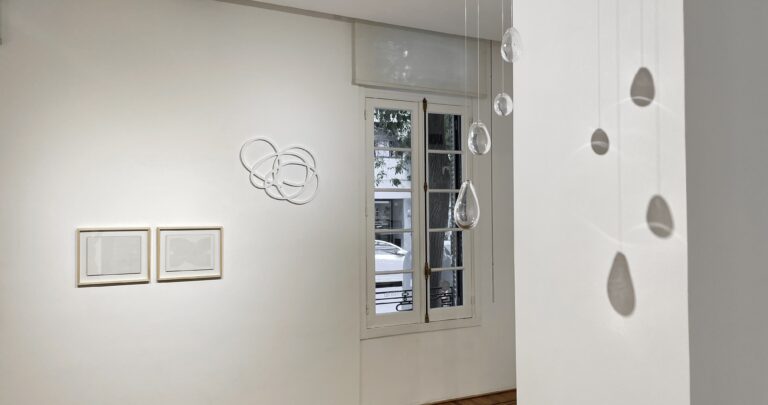
Axel Straschnoy · 02.11.2023 - 29.12.2023
Brave the Heavenly Breezes

André Komatsu, Enio Iommi, Clorindo Testa · 23.08.2023 - 31.10.2023
Hiato
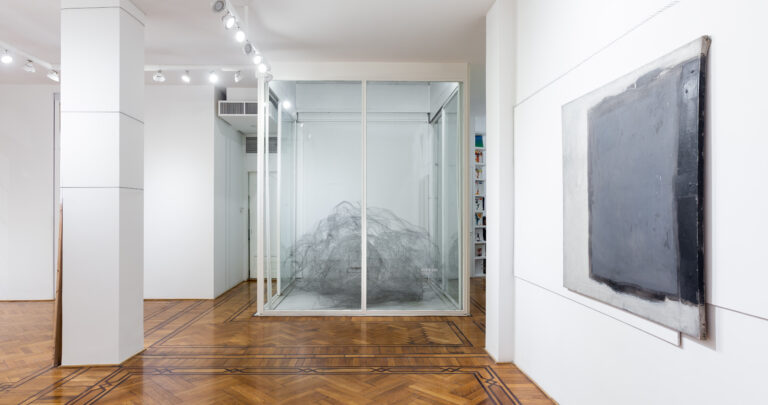
Mariela Vita · 12.07.2023 - 16.08.2023
GEJIGEJI

Polesello, Aizenbeg, Kosice, Vardanega, Le Parc, Iommi, Puente, Arden Quin, Espinosa, Demarco, Straschnoy, De Volder, Pastorino, Imola, Batistelli, Cabutti, Reyna · 09.02.2023 - 15.03.2023
Eléctrico/ ecléctico

Fabiana Imola & Aníbal Brizuela · 16.09.2022 - 02.12.2022
Inside, the shapes. They move alone

Romina Ressia · 09.06.2022 - 25.08.2022
Grow flowers

Martín Reyna · 11.03.2022 - 03.06.2022
Color in transit

Matilde Marín · 08.02.2022 - 02.03.2022
25FPS

Clorindo Testa · 11.11.2021 - 31.01.2022
Testa, projects and other games

Cabutti, De Volder, Reyna, Imola, Ventoso, Ressia. · 05.10.2021 - 22.10.2021
Group Show 2021 II

Matilde Marín · 23.07.2015 - 21.09.2015
Undetermined landscapes

Marcela Cabutti · 16.07.2021 - 22.09.2021
Balcarce, topographic memories of a landscape

Benito Laren · 12.05.2012 - 22.06.2012
Casino

Lila Siegrist · 26.06.2012 - 27.08.2012
Vikinga Criolla

Cárdenas, Imola, Marin, Res, Sommerfelt, Ventoso · 10.08.2012 - 11.10.2012
Morphological confrontations

Martin Reyna · 20.09.2012 - 20.11.2012
Reyna in the horizon of color

Romina Orazi · 04.12.2012 - 04.02.2013
Subject to infinite division

Aizenberg, Boto, Espinosa, Iommi, Lozza, Le Parc, Kosice, Silva, Tomasello, Vardánega · 01.06.2013 - 31.07.2013
Dimensional

Antoniadis, Marín · 07.09.2013 - 07.11.2013
Double contrast

Andrés Sobrino · 28.03.2013 - 30.05.2013
Andrés Sobrino

Antoniadis, Cabutti, Laren, Reyna, Florido, Sobrino, Straschnoy, Tarazona, Ventoso · 20.12.2013 - 15.02.2014
Universus

Elena Dahn · 25.03.2014 - 26.05.2014
Elena Dahn

Marcela Cabutti · 15.07.2014 - 15.09.2014
Finding meaning through shapes

Axel Straschnoy · 12.11.2014 - 19.01.2015
La Figure de la Terre

Fusilier, León, Quesada Pons y Vega · 15.03.2015 - 30.04.2015
Limbo

Luciana Levington · 28.05.2015 - 24.07.2015
Luciana Levinton

Leo Battitelli · 12.11.2015 - 12.01.2016
Gargalhadas

Hasper, Scafati · 10.02.2016 - 11.04.2016
Womens’ double

Axel Straschnoy · 12.05.2016 - 13.06.2016
Today, great tomorrow!, in the pines wind blows from the past.

Arden Quin, Boto, Demarco, Espinosa, Iommi, Le Parc, Lozza, Polesello, Puente, Silva, Testa, Tomasello · 07.06.2016 - 05.08.2016
Masters of the avant-garde

De Volder, Sobrino · 11.08.2016 - 10.10.2016
Andres Sobrino and Beto De Volder

Battistelli, Cabutti, Cacchiarelli, Sobrino, De Volder · 02.01.2017 - 28.02.2017
2017 Group Show

Fabiana Imola · 28.02.2017 - 14.04.2017
The forest, the rain and other scenes

Alberto Heredia · 06.09.2017 - 11.10.2017
Alberto Heredia

Federico Manuel Peralta Ramos · 31.10.2017 - 29.12.2017
Federico Manuel Peralta Ramos

Marcela Cabutti · 10.11.2017 - 31.01.2018
About the effective distance between objects

Luciana Rondolini · 15.02.2018 - 15.04.2018
End

Estanislao Florido · 27.04.2018 - 01.07.2018
The disenchanted object

Battistelli, Cabutti, Marín, Straschnoy, Ventoso, De Volder · 06.07.2018 - 31.08.2018
2018 Group Show

Rogelio Polesello · 06.09.2018 - 20.12.2018
Vortex

Cabutti, Imola, Marín, Reyna, Rondolini, Straschnoy, De Volder · 27.02.2019 - 03.04.2019
2019 Group Show

Alberto Greco · 04.04.2019 - 31.08.2019
The bad handwriting

Matilde Marín · 25.09.2019 - 31.12.2019
As the blue smoke of Ítaca is spotted

Esteban Pastorino · 10.09.2020 - 29.01.2021
Pastorino

Marín, Imola, De Volder, Reyna, Florido, Straschnoy, Pastorino · 08.02.2021 - 01.04.2021
2021 Group Show

Alberto Greco · 06.04.2021 - 30.06.2021
LA PITTURA È FINITA. Poses and impostures of Alberto Greco in Italy
