biography
Emilio Pettoruti was born in the city of La Plata, Argentina, on October 1, 1892. The eldest of twelve siblings, he was the son of Italian immigrants. From a young age, he was encouraged by his grandfather to pursue drawing and painting. He studied Fine Arts in his hometown under masters such as Atilio Boveri and Emilio Coutaret—from whom he learned perspective—and began a career as a caricaturist. In 1911, he participated in a caricature exhibition, featuring a work that depicted Rodolfo Sarrat. Two years later, a scholarship from the government of the Province of Buenos Aires enabled him to travel to Europe.
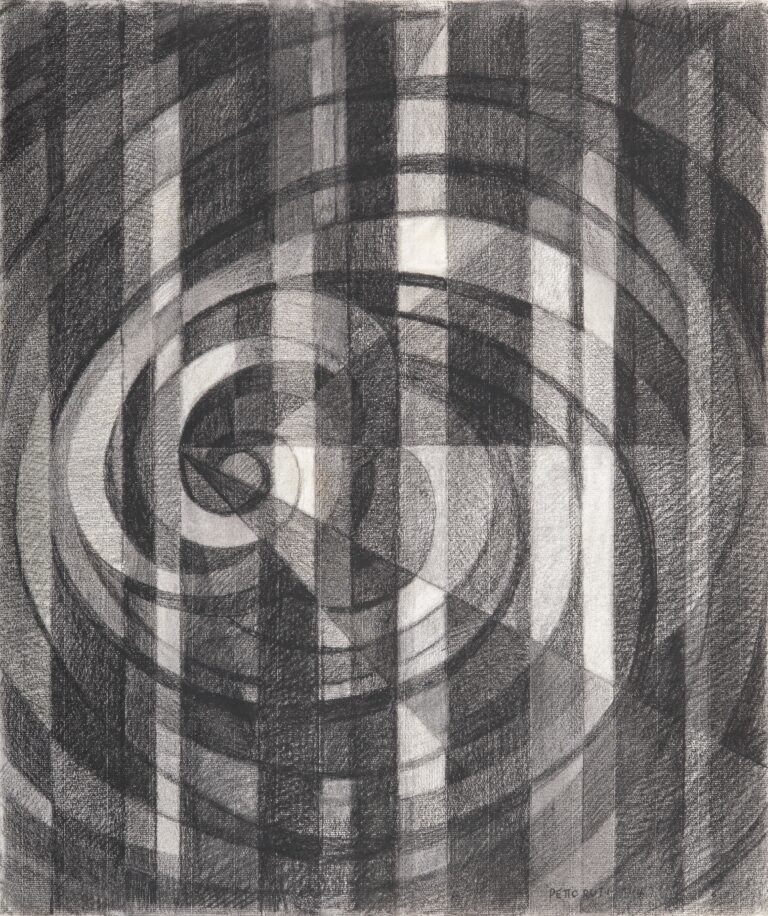
In 1913, he set sail for Europe on that scholarship. He settled in Florence, and although he initially intended to study classical art and culture, his path took a completely different turn. At the bookstore of Ferrante Gonnelli—who was affiliated with the Futurists—he acquired a copy of the magazine *Lacerba*. This publication was associated with the Futurist movement, which advocated for progress through the use of machinery. Later, at an exhibition by the group, he gained access to their 1909 manifesto, authored by Marinetti. Through Gonnelli, Pettoruti subsequently met key figures of the Futurist movement. This was the first movement to transform both his life and his work; the impact was such that in 1914, he held an exhibition titled the *First Winter Exhibition of Tuscany*, featuring four works—two of which were titled “Harmony-Movement-Space (abstract design).” There, he presented Futurist concepts by depicting movement in an abstract form. This phase of his career came to an end when he discovered Cubism.
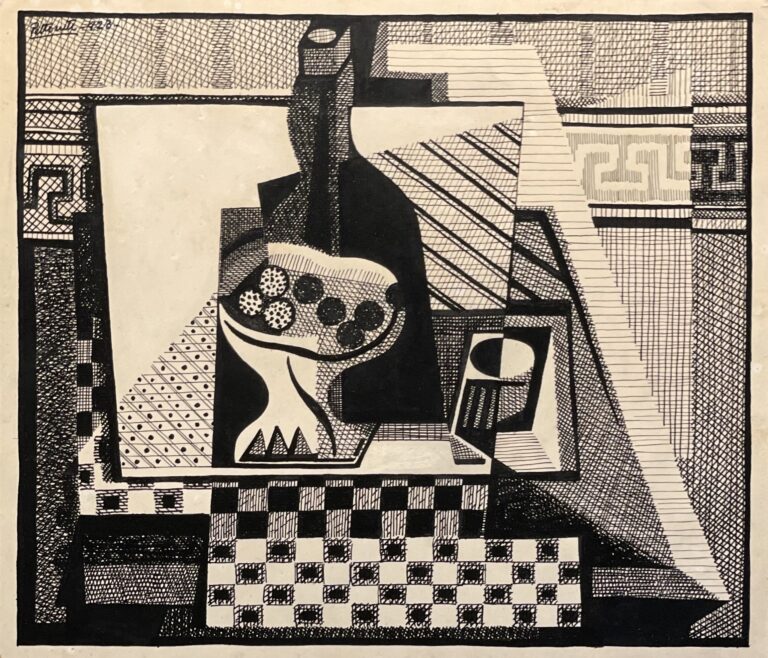
During those years, he also experimented with collage, a technique employed by avant-garde and Cubist artists in the creation of their works. Futurism no longer met Pettoruti’s expectations; he believed painting should be a matter of “construction and color.” Cubism aligned with these requirements, allowing him to paint the objects he loved—such as siphons, musical instruments, suns, bottles, and fruit bowls.
He lived in Rome between 1916 and 1917, a period that saw a shift in his artistic vision. Following World War I, a “return to the classical” emerged in Europe in opposition to avant-garde movements. In this climate, Pettoruti befriended artists from the avant-garde circles associated with the magazines *Cronache d’Attualità* and *Valori Plastici*—including Giacomo Balla, Enrico Prampolini, Giorgio de Chirico, and Carlo Carrà—who frequented the Aragno and Il Greco cafés. Pettoruti embraced this new perspective. Works from this period include *Woman in the Café* (1917) and *The Philosopher* (1918).
In 1916, he met Xul Solar; years later, the two would become pioneers of the Argentine avant-garde. That same year, he held his first solo exhibition at the Gonnelli Gallery. In subsequent years, he exhibited in Milan and Rome (1922), where he met the Peruvian writer José Carlos Mariátegui; he formed a deep friendship with Mariátegui and stayed at his home. He then spent time in Germany (1923), where he once again stayed with his friend José Carlos Mariátegui and worked on what would become the first portrait of him painted from life—a work now exhibited at the Lima Art Museum.
In 1924, he traveled to Paris, where he met the Cubist artist Juan Gris. He subsequently returned to Argentina alongside Xul Solar. That October, he held a solo exhibition at the Witcomb Gallery that sparked a scandal: on one hand, his detractors—accustomed to the *costumbrista* and naturalistic painting styles prevalent in the country at the time—viewed his works as “a grave offense against the nation’s dignity.” On the other hand, progressives saw Pettoruti as the embodiment of the new. During this period, the Province of Córdoba acquired one of his works, titled *Bailarines* (Dancers), amidst considerable controversy.
In 1930, he married the Chilean art critic María Rosa González. That same year, he was offered the position of director of the Museum of Fine Arts in La Plata; he set out to professionalize the institution, expanding its art collection and purchasing works by artists such as Xul Solar.
In 1942, at the invitation of the Committee for Inter-American Artistic and Intellectual Relations, he spent eight months touring museums and universities across the United States. He exhibited his work at the San Francisco Museum of Art and other U.S. museums.
Major museums in the United States invited him to hold both solo and group exhibitions; in 1943, MoMA in New York acquired his painting *Copa verde-gris* (Green-Gray Cup). In 1948, he held another retrospective at the Salón Peuser, followed in 1950 by the *Retrospective Exhibition of Painter Emilio Pettoruti* at the National Museum of Fine Arts in Chile.
In 1952, after resigning from the museum due to disagreements with the Peronist government, he settled in Europe once again and resumed exhibiting his work in Milan and Florence, as well as in other major European capitals: Rome (1953) and Paris (1954), where he displayed his art alongside painters of the stature of Latour, Masson, and Miró.
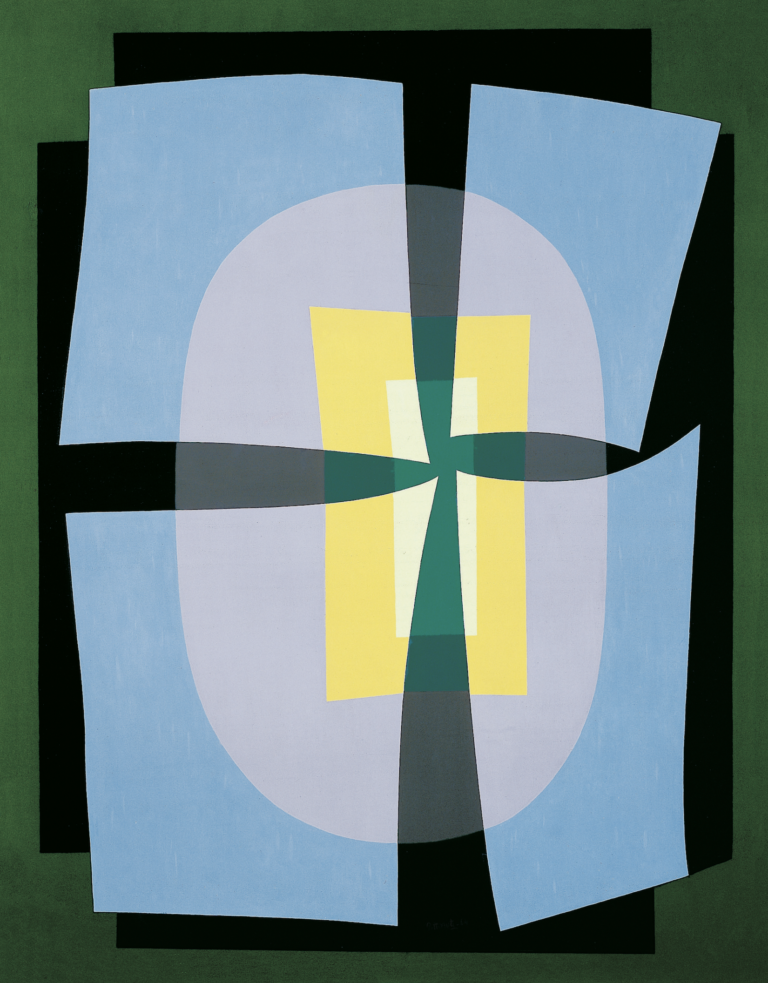
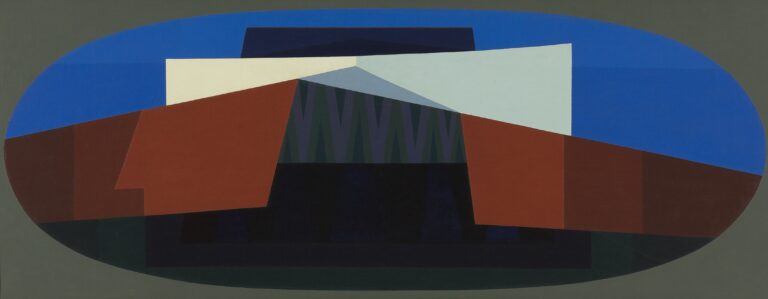
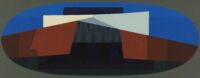
While in Europe, he returned to abstraction, exploring themes such as summer nights, twilight at sea, and oval suns; in the words of French artist Roger Bissière, Pettoruti aspired to “certainty, order, purity, and spirituality.”
He created series of paintings—such as his suns, harlequins, and goblets—that were less abstract in nature; these works, which were clearer and more geometric, reflected the “return to order” aesthetic. He was appointed a full member of the National Academy of Fine Arts.
In 1970, he decided to return to his homeland, but he passed away in Paris on October 16, 1971, before he could do so.

view more
artworks

CONTACT GALLERY
CONTACT GALLERY

CONTACT GALLERY
CONTACT GALLERY
CONTACT GALLERY

CONTACT GALLERY


CONTACT GALLERY


CONTACT GALLERY

exhibitions
others artists
Margarita Paksa

Mariela Vita

Victor Magariños D.
Emilio Renart

Gyula Kosice
Osvaldo Lamborghini

Alberto Greco

Clorindo Testa

Ventoso

Rogelio Polesello

Raúl Lozza

Matilde Marín

Martin Reyna

Marcela Cabutti

Luis Tomasello

Julio Le Parc

Federico Manuel Peralta Ramos

Esteban Pastorino

Enio Iommi

Beto De Volder

Axel Straschnoy

Alberto Heredia
